
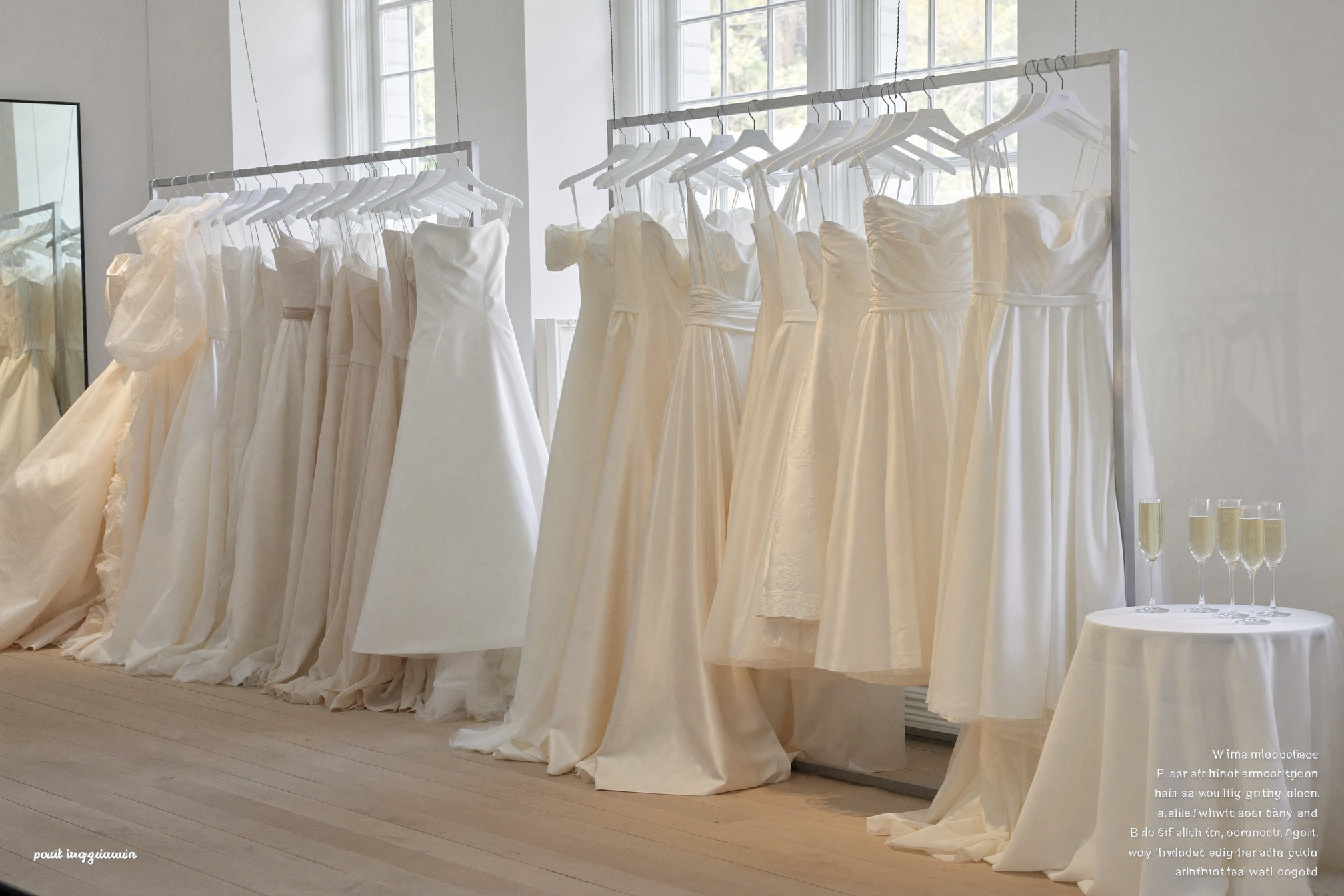
Your first wedding dress appointment is a chance to learn which shapes, fabrics and details feel right on you. You do not need to arrive with one perfect dress in mind, and you do not need to buy on the day. Use this guide to prepare a clear brief, compare your shortlist and understand the full cost before committing.
Your appointment checklist
- Confirm the appointment length, fee, cancellation policy and guest limit with the boutique.
- Ask which sample sizes and price ranges are available before booking.
- Bring a few inspiration images and note the specific details you like in each.
- Wear comfortable underwear and bring any undergarments you expect to use with the dress.
- Bring shoes of a similar height to your wedding shoes if you have them, and ask the boutique what else it recommends.
- Set an outfit budget that includes alterations, accessories and any applicable delivery or rush fees.
Turn romantic inspiration into a useful brief
Instead of asking for a dress that is simply “romantic,” choose a few details you want to explore: floral lace, soft sleeves, a flowing skirt, a defined waist or a long train. Then separate essentials from preferences. For example: “I want to sit comfortably, I prefer covered shoulders, and I would like to try both lace and plain fabrics.” This gives your consultant more to work with than a folder of unrelated images.
If your inspiration comes from an AI-generated video, label it as a concept when sharing it. The exact gown may not exist. Ask which details can be achieved in a real garment and which would require custom work. A dramatic floating sleeve or unusually light-looking train in an AI image is not evidence of how a real dress will move or feel.
Set the full budget before trying on dresses
Tell the boutique both your dress-only limit and your total outfit limit. Alteration costs depend on the garment, work required and provider; a fixed percentage is not a reliable quote. Request an estimate for the actual dress you are considering, including changes to the hem, bodice, sleeves or train.
Use this planning calculation: total outfit allowance minus estimated alterations, accessories and applicable fees equals your dress allowance. For an illustrative budget of 2,000 in your own currency, reserving 400 for alterations and 200 for accessories leaves 1,400 for the gown. These are planning figures, not market prices: replace them with written quotes.
Choose companions who help you decide
Check the shop’s guest limit and choose people who can listen to your preferences. Going alone is also an option. Before the appointment, ask companions to let you describe how a dress feels before offering their opinions. “Can you move comfortably?” is often more useful than a vote on everyone’s favourite neckline.
Compare dresses using the same checks
For each shortlisted gown, ask permission to take front, side and back photographs and record its designer and style number. With the consultant’s guidance, sit, walk, turn and raise your arms. Note where you feel pulling or slipping, and ask which fit issues alterations could reasonably address. A clipped sample helps you explore a shape, but it does not guarantee the final fit.
| What to record | Your notes for each dress |
|---|---|
| Identity | Designer, style number, colour and quoted size |
| Comfort | Sitting, walking, arm movement, weight and support |
| Alterations | Required changes, feasibility and estimated cost |
| Full cost | Gown, alterations, accessories and applicable fees |
| Timing | Expected arrival, fittings and collection date |
| Decision | Favourite detail, remaining concern and next question |
Questions to ask before paying a deposit
- Am I buying this sample, an in-stock dress or a gown that will be ordered?
- What size and colour will be ordered, and how were they selected?
- What arrival date is estimated, and how much time remains for fittings?
- Are alterations included? If not, who provides them and when should I book?
- What is the payment schedule, and what are the cancellation, return and change policies?
- How long is this quote valid, and can I receive the details in writing?
Delivery times, sample availability and policies vary by shop and dress. If your wedding is close, disclose the date at booking and ask about realistic in-stock or sample options. Do not assume a rush order or major alteration is possible until the provider confirms it.
Frequently asked questions
Do I have to buy at my first appointment?
No. You can use it to explore options and take notes. If you want time to decide, ask about stock availability and the quote’s expiry rather than assuming the same dress and price will remain available.
What if the shop does not carry samples in my size?
Ask before travelling which gowns you can try comfortably and how the consultant will demonstrate the fit. You can choose a different boutique if the available samples will not help you make a confident decision. Read our plus-size bridal shopping guide for more questions to bring.
What if I like two dresses equally?
Compare comfort, full cost, alteration needs and suitability for your venue. If possible, arrange another try-on. Feeling calm and comfortable is a valid response; tears are not a requirement.
Further preparation
For retailer-specific preparation, see David’s Bridal’s try-on guidance and alterations FAQs. Confirm arrangements with your own boutique because services and policies differ. To complete your outfit, explore our bridal shoes and accessories guide.