
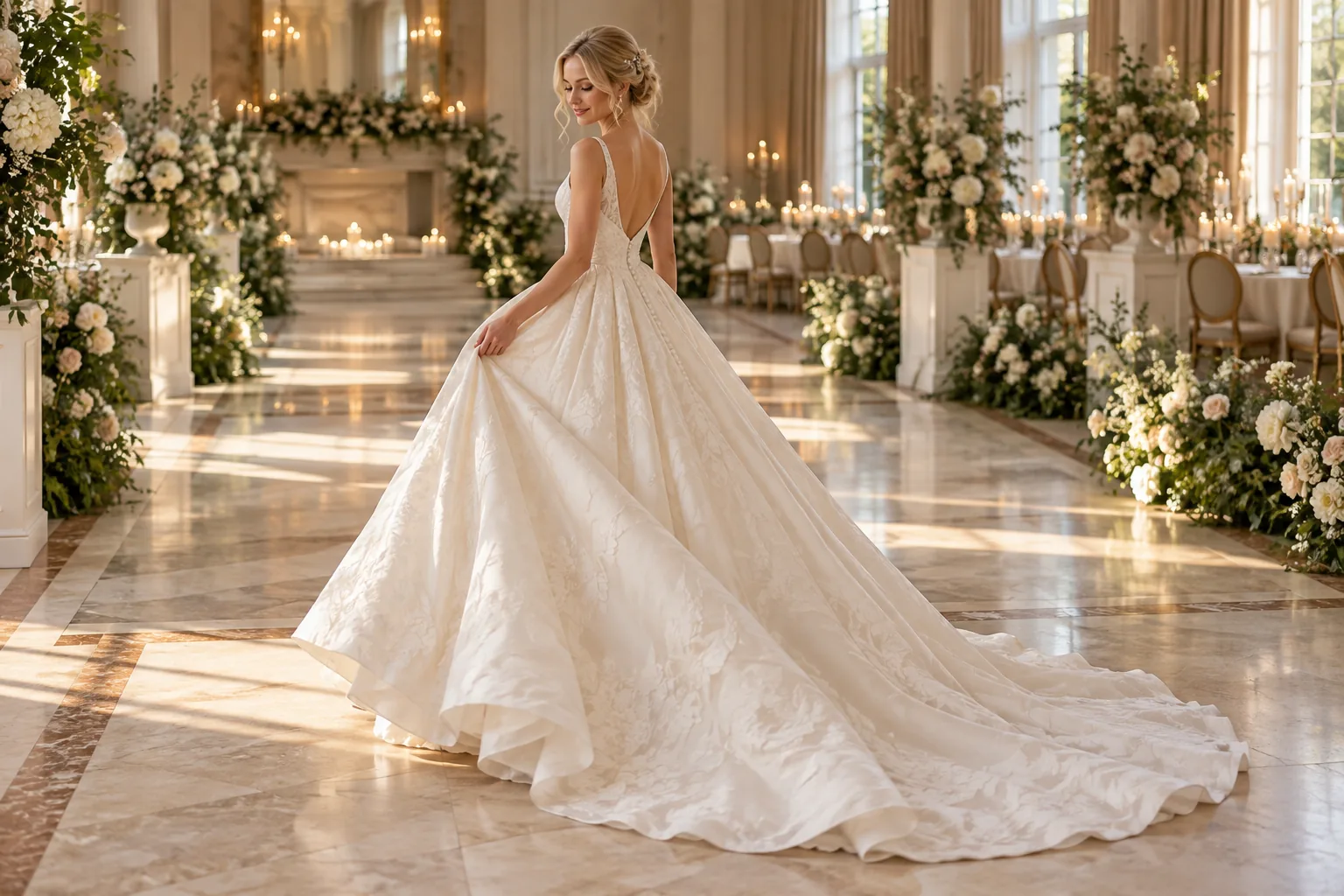
The first glimpse of a wedding dress can be spectacular. The harder test comes a few seconds later: the bride walks, turns toward guests, stands beside her partner, and eventually sits down. A gown that looks striking from the front needs to work from the side and back too.
If you have saved a video of a wide, circular skirt or a dramatic ballroom entrance, use it as a visual brief, not a promise that a particular dress will behave the same way. Camera height, editing, venue space and the person moving in the gown all change what the audience sees. This guide turns the idea into questions you can take to a bridal appointment and alterations fitting.
Decide what “360-degree” means to you
The phrase may describe three different wishes: a skirt with volume all around, a dress that looks considered from every angle, or a slow turn that gives guests a complete view. You may want one, two or all three. Write down the priority before shopping.
Take two or three reference images and mark the detail in each that matters: skirt shape, hem movement, back detail, train, neckline or camera angle. Ask the boutique which elements belong to the real garment and which are styling. A still image cannot tell you how heavy the dress feels or how it travels through a doorway.
Test the dress as a sequence, not a pose
At the appointment, ask for enough clear floor space to try your actual entrance. Wear shoes close to your planned wedding heel height when the boutique recommends it. Have someone record a short video from the front, side and back with your permission. Watch the footage at ordinary speed, without a wide-angle filter or dramatic slow motion.
Use this sequence:
- Walk the distance of a short aisle at your natural pace. Notice whether your feet catch the inner layers or whether you need to hold the skirt continuously.
- Pause, turn toward another person and turn back. See whether the skirt settles neatly or needs a helper to arrange it.
- Take a few small steps backward and sideways. These movements happen during photographs and greetings even if the entrance is straight ahead.
- Sit in a chair of roughly the height you expect at dinner, then stand. Check the bodice, waist, sleeves and skirt volume.
- If there is a train, try the actual bustle or proposed changeover. Ask who will fasten it and how long the process takes in this gown.
No single silhouette passes every test. The useful result is a list of compromises you are happy to accept, and ones you are not.
Give the venue a job in the decision
Measure or confirm the practical route: entrance doorway, narrowest passage, stairs, aisle width, turning space at the ceremony point and the path to dinner. Ask your venue whether anything on that route changes between the ceremony and reception. Bring those details to the boutique or alterations specialist.
Think about the floor as well as the room. A smooth indoor aisle, outdoor grass, steps and a crowded dance floor place different demands on a hem and train. If you need someone to spread a train for a photograph, plan that as a brief assisted moment rather than assuming it will stay arranged as you walk.
Compare the whole outfit and the whole day
A wide skirt, overskirt and long train can create different kinds of drama. An overskirt may offer a second outline, but it introduces attachment points and a changeover. A train makes an entrance from behind memorable, but requires a realistic plan for movement after the ceremony. Discuss the construction of the specific gown with the boutique and an alterations professional; a reference image cannot establish what alterations are possible.
Ask for an itemized estimate that covers the dress, alterations, bustle or removable piece, underlayers, shoes, cleaning and any rush fee. If the ceremony look needs a helper, decide who that person is. The best entrance is one you can enjoy without spending the entire day managing fabric.
The fitting and venue worksheet
Copy these prompts into your notes and fill them out for each shortlisted dress:
| Question | Your answer |
|---|---|
| Which view matters most: front, side, back or movement? | ________ |
| Can I walk, turn, sit and stand comfortably? | ________ |
| What happens to the hem in my intended shoes? | ________ |
| What is the narrowest doorway or aisle on the route? | ________ |
| How will the train or overskirt be managed after the ceremony? | ________ |
| Who will help, and did that person practice the changeover? | ________ |
| What is the complete cost after alterations and accessories? | ________ |
| Which detail did the phone video reveal that the mirror missed? | ________ |
Bring the completed sheet to a second appointment. If two dresses look equally dramatic in photographs, the one that lets you move and relax may be the stronger choice.
For a broader appointment plan, see our first wedding dress shopping checklist. If you are weighing a second ceremony look, compare detachable sleeves and overskirts. A fitting professional should advise on the feasibility and cost of alterations to your particular gown.
Editorial note: This is a planning worksheet, not a review of a dress we wore. The featured image is an AI-generated fashion concept, not a specific dress for sale or a real wedding. Read the boutique’s and alterations specialist’s instructions for the garment you choose.