
For Fall 2026 bridal shopping, start with details you can compare at a fitting: lace texture, waist shape, volume, removable layers and fabric colour. Official designer collections show several of these directions, but a runway look is an example, not evidence that every bride is choosing it.
The point is no longer choosing the dress that represents “this year’s bride.” It is choosing which details actually support the wedding you are planning and the way you want to move through the day.
Collection examples behind this guide
In Monique Lhuillier’s official Fall 2026 bridal lookbook, Odette combines Chantilly lace with a dropped waist, while Keaton pairs a lace-and-Mikado ball gown with a cropped lace jacket. The collection also includes ivory and silk-white looks. Justin Alexander Signature’s Fall/Winter 2026 presentation emphasizes sculptural elements, basque waists and volume. These are specific collection examples; the fitting advice below is our editorial interpretation. Availability and stock vary by boutique, and some runway pieces may not be sold.
1. Sculptural Lace
Lace is moving beyond the delicate overlay. Fall 2026 gowns are using floral lace, dimensional embroidery, and appliqué almost architecturally, allowing texture to become part of the silhouette instead of decoration simply placed on top.
This works particularly well when the rest of the dress is controlled. If the lace is dramatic, the neckline, jewelry, veil, and hair do not all need to compete with it.
2. Liquid Slip Dresses
A fluid slip gown is an alternative for brides who prefer movement to volume. Consider soft draping, an open back or a simple silhouette alongside the more structured collection examples above; this is a shopping option rather than a measured Fall 2026 popularity claim.
They can look effortless in photographs, but they deserve careful fitting. Simple fabric leaves less room to hide awkward proportions or poor alterations. Walk, sit, turn, and take photographs from multiple angles before making a decision.
3. Champagne and Soft Ivory Tones
Ivory and silk white appear in the cited collection. If you prefer cream or champagne, ask the boutique which shades are available for the actual gown you are considering. Colour is a personal choice, and its appearance changes with lighting and the fabric underneath any lace.
Always photograph the gown in both daylight and indoor lighting before choosing the final shade. Boutique lighting can make a fabric appear warmer or cooler than it will look in real wedding photographs.
4. Detachable Details That Change the Silhouette
Overskirts, removable sleeves, capes, and other convertible elements continue to make sense because they allow one gown to create more than one look.
But a removable detail is only useful if changing it is actually simple. Ask who removes it, how long the change takes, where the attachment points sit, and what the dress looks like immediately after the piece comes off.
If you are deciding between two removable options, see our comparison of detachable wedding dress sleeves vs. overskirts.
5. Check the Back of the Dress
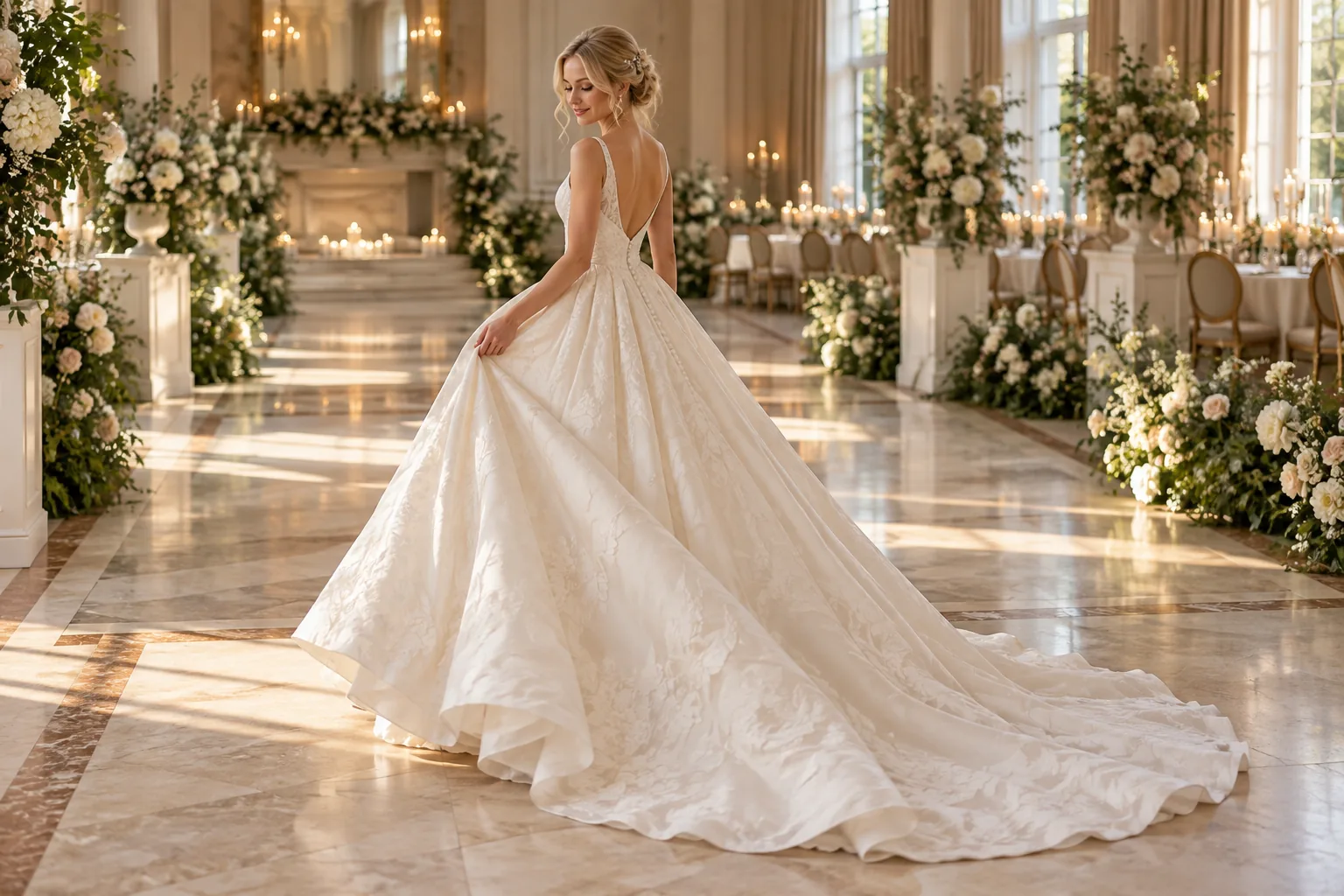
A front-facing fitting photo does not show the whole dress. Inspect back detail, trains, buttons and bows, and watch how the skirt settles after a turn. The value of each detail depends on your venue, comfort and preferences.
That does not mean every gown needs a dramatic back. It means you should evaluate the dress from every angle, especially if your ceremony entrance, staircase, aisle, or reception space will naturally be photographed from behind.
Our 360-degree wedding dress guide includes a practical movement test you can use during fittings.
6. Minimal Does Not Mean Plain
A restrained gown is another option to compare. The interest may come from the cut of the waist, the shape of the train, a sculptural neckline, or the way the fabric falls rather than crystals, appliqué, or layered embellishment.
This is especially useful for brides drawn to quiet luxury. A minimal gown needs fewer details, but each detail becomes more visible, so tailoring and fabric quality matter even more.
7. Romantic Volume Is Still Here
Volume appears in both cited collections, including Monique Lhuillier’s Ascher ball gown. A full skirt does not have to be heavily embellished; compare the silhouette and fabric as separate decisions.
A clean bodice with a wide skirt can feel more modern than adding decoration to every surface. If volume is what creates the emotional reaction for you, test the practical side before committing: stairs, doorways, aisle width, transportation, sitting, and the reception.
A gown needs to survive the day as well as the photograph.
8. Try Mixing Aesthetics
Your bridal styling does not have to fit into one neat category. A minimalist gown can have a cathedral veil. A romantic lace dress can be paired with almost bare beauty. A structured gown can soften at the reception with loose hair and understated jewelry.
This removes some of the pressure to define yourself as a “classic bride,” “modern bride,” or “romantic bride” before you even begin shopping.
What to Save Before Your Bridal Appointment
Instead of saving twenty complete dresses, save individual details:
- One neckline you love
- One skirt shape
- One sleeve style
- One train length
- One fabric or texture
- One back detail
Then ask the stylist to help identify the pattern. You may discover that the dresses on your mood board look completely different but share the same waist placement, neckline, or movement.
If this is your first appointment, our wedding dress shopping guide covers what to bring, what to photograph, and what to expect before you arrive.
The Fall 2026 Bridal Takeaway
The useful takeaway for shopping this season is choice. Sculptural lace can sit beside a barely decorated slip dress. Champagne can sit beside traditional ivory. A dramatic ceremony gown can become something simpler for the reception.
Trends are useful vocabulary, not instructions. Use them to explain what you like, then judge the actual gown by how it looks, moves, photographs, and feels on you.