
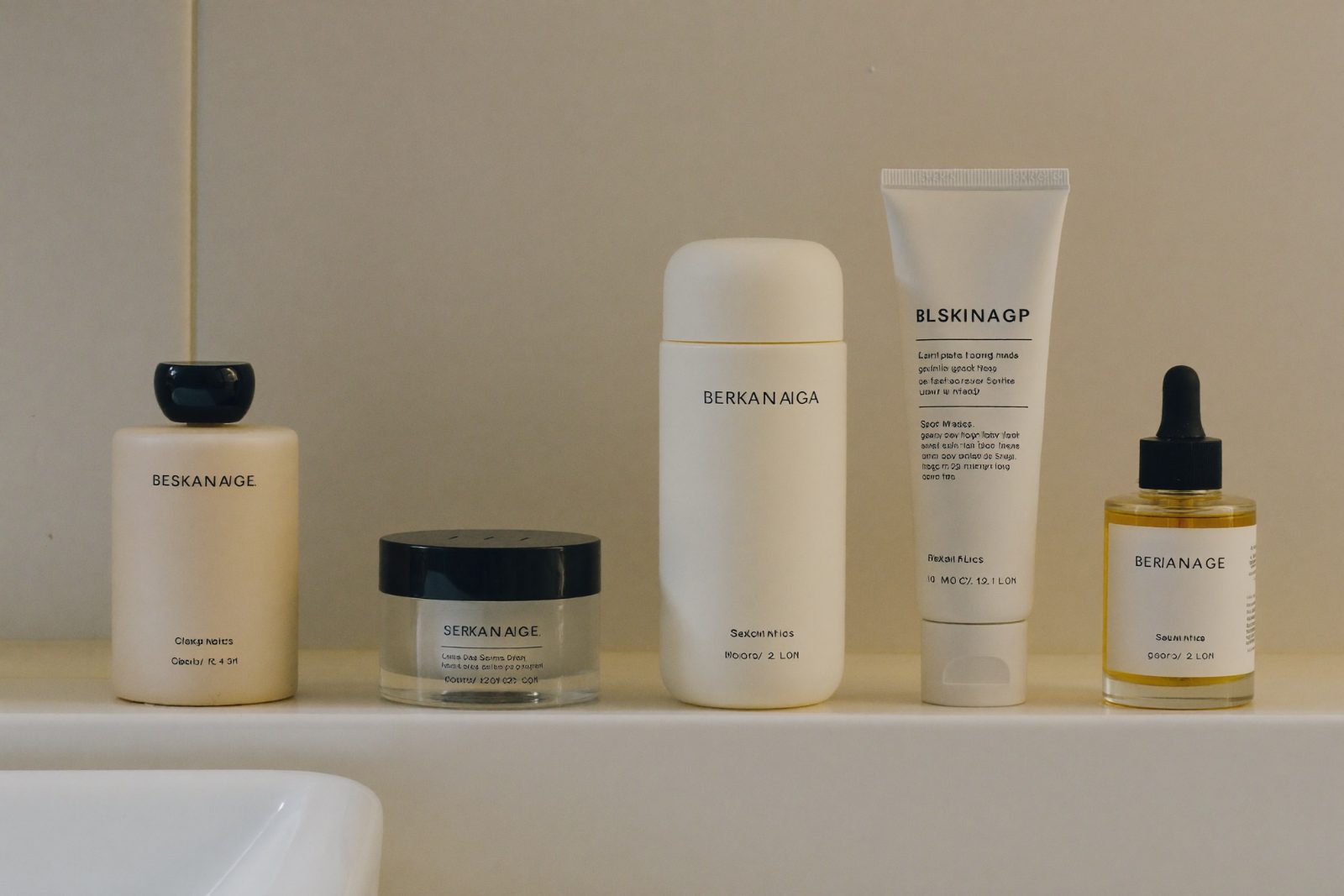
Nothing in beauty generates more quiet confusion than the order of a skincare routine. You own good products; you’re just not sure whether the serum goes before the moisturiser, where the eye cream fits, and whether sunscreen really has to be last. Let’s settle it — properly, once.
The one rule behind every routine
Skincare order isn’t memorisation — it’s physics. Thin, watery products can’t penetrate through rich, occlusive ones, so you apply from lightest to heaviest. Water-based serums first, lotions next, creams after, oils and SPF at the end. If you learn nothing else, that single principle correctly orders 95% of routines.
Morning, step by step
One: a gentle cleanse — or just lukewarm water if your skin is dry and last night was low-key. Two: your water-based serum; morning is where vitamin C earns its reputation. Three: eye cream, tapped with a ring finger. Four: moisturiser. Five, always five: broad-spectrum SPF 30+, applied generously. Nothing goes over sunscreen except makeup — and as we covered in our SPF myths guide, makeup with SPF doesn’t count as your protection.
Evening, step by step
One: remove the day — double cleanse if you wore makeup or sunscreen, single cleanse otherwise. Two: your treatment. This is the retinol or exfoliating acid slot, on dry skin, and it’s one or the other per night, never both. Three: eye cream. Four: moisturiser — richer than your daytime one if your skin runs dry. Night is for repair, so this is where the actives live; morning is for protection.
Where people go wrong
Applying actives to damp skin (retinol absorbs too fast, stings more), layering three serums because each was a good idea individually, exfoliating and retinol on the same night, and skipping moisturiser after acids because skin ‘feels fine’. It won’t by Thursday. If your routine has grown past six steps and your skin is unimpressed, the answer is almost never a seventh — our skin longevity guide makes the case for the boring, consistent version.
Frequently asked questions
Do I really need to wait between layers?
Mostly no. A thirty-second pause between layers is plenty for everyday products. The exceptions: let retinol sit on fully dry skin, and give sunscreen a minute to settle before makeup.
Where does toner fit?
Right after cleansing, if you use one. Modern hydrating toners are essentially thin serums — thinnest first, as always. Astringent, alcohol-heavy toners are the one step most skins can happily drop.
Eye cream before or after moisturiser?
Before, because it’s usually lighter — and so your moisturiser doesn’t dilute it. If your eye product is heavier than your moisturiser, swap the order. Texture rule wins over label.
Can I skip moisturiser if my serum feels hydrating?
Oily skin sometimes can, especially in summer. Everyone else: the moisturiser is what keeps the serum’s hydration from evaporating back out. Think of it as the lid on the jar.
Still deciding what belongs in each slot? Our capsule vanity guide covers exactly that — and the newsletter delivers every new guide the morning it publishes.
KEEP READING — start with how to know your skin type, then see what niacinamide actually does for your serum step.
Quick comparison: morning vs night order
| Step | Morning (AM) | Night (PM) |
|---|---|---|
| 1 | Gentle cleanser | Cleanser (double cleanse if wearing SPF/makeup) |
| 2 | Toner or essence (optional) | Toner or essence (optional) |
| 3 | Treatment serum (vitamin C, niacinamide) | Active treatment (retinol or exfoliant — not both) |
| 4 | Eye cream | Eye cream |
| 5 | Moisturizer | Richer moisturizer or night cream |
| 6 | Sunscreen — never skip | — |
The thin-to-thick rule is the industry standard — Healthline’s dermatologist-reviewed guide follows the same order.