
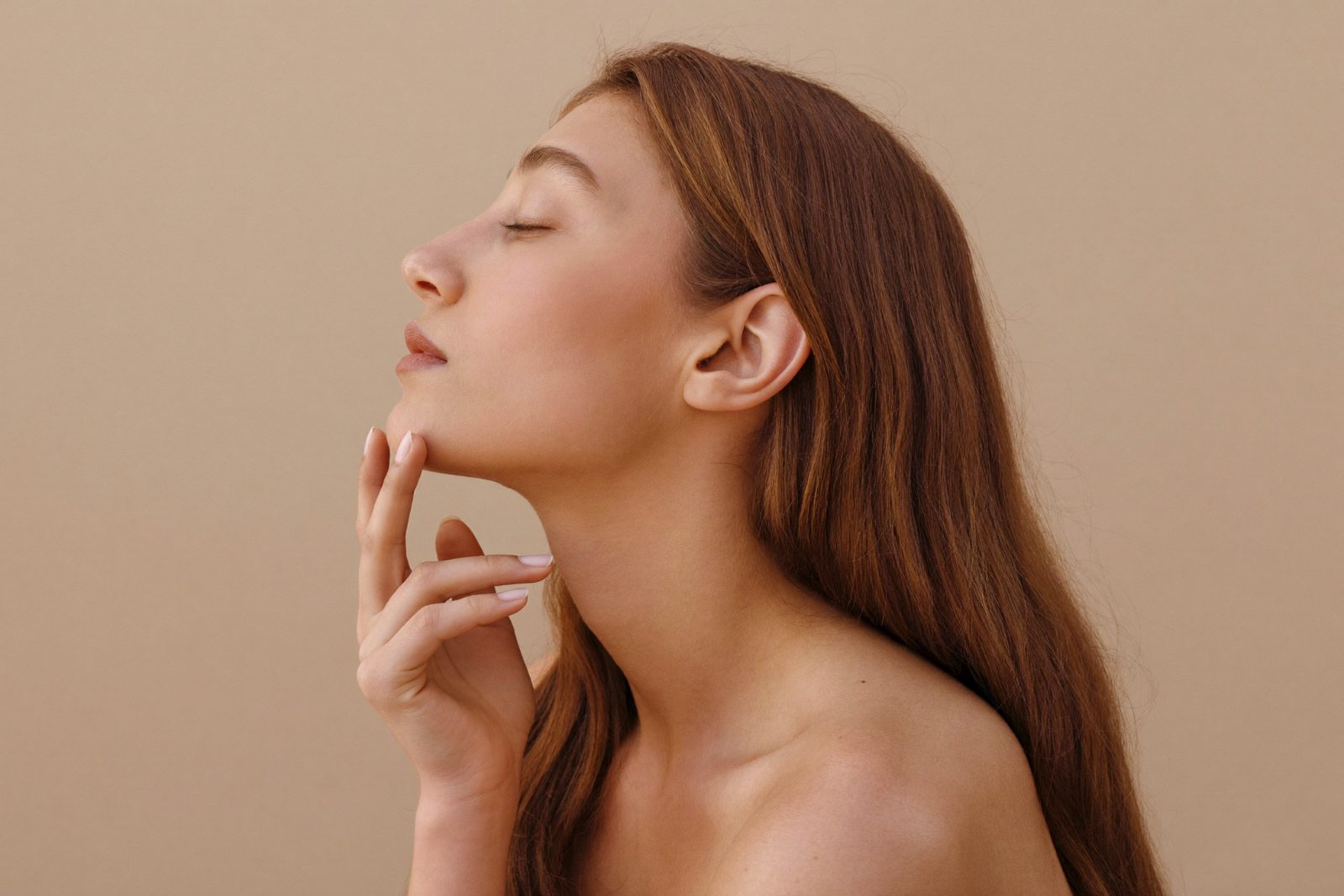
There is a specific frustration to breakouts that live only on your chin and jawline: the rest of your face behaves, while the lower third runs its own schedule — usually synced suspiciously to your cycle. Searches for chin and jawline acne have climbed 80 percent this year, and the answer to it is different from ordinary breakout advice. Here is what that placement is telling you.
Why the chin and jawline are different
The lower third of your face carries the densest concentration of hormone-sensitive oil glands. When androgens rise — before a period, around ovulation, coming off hormonal birth control, or during stress — these glands respond first, producing thicker sebum that blocks pores from below. That is why chin acne runs deeper and hurts more than a surface whitehead on your forehead.
It is also the zone your hands, phone, scarves and pillowcase touch most. So two very different forces — hormones from the inside, friction and residue from the outside — converge on the same strip of skin.
The usual suspects, ranked
| Cause | The giveaway | What helps most |
|---|---|---|
| Hormonal fluctuations | Flares 5–10 days before your period, deep tender bumps | Consistency, salicylic acid, patience — and a GP or dermatologist if severe |
| Friction and pressure | Breakouts where your phone, mask or helmet strap sits | Clean the object, not just the skin |
| Hair and body products | Bumps along the jaw and hairline after switching products | Fragrance-free, non-comedogenic formulas; rinse conditioner away from the jaw |
| Over-cleansing | Tightness plus breakouts that keep worsening | Step back to a gentle routine and let the barrier recover |
| Stress | Flares in exam or deadline weeks regardless of cycle | Sleep and stress care — unglamorous, effective |
Reading the pattern: a quick self-check
Track three things for one month: when breakouts appear, exactly where, and what touched that area. A flare that arrives like clockwork before your period is hormonal until proven otherwise. Bumps concentrated on one side often trace back to a phone screen or sleeping position. A jawline ring after a new shampoo is the product, not your hormones.
Chin acne is rarely random — it is a pattern wearing a disguise.
The routine that helps
Keep it boring and consistent: a gentle cleanser twice daily, a salicylic acid serum or toner a few nights a week to keep pores clear from within, a light non-comedogenic moisturizer, and SPF every morning. Salicylic acid earns its place here because it is oil-soluble — it can travel into the pore where hormonal congestion starts.
If you are new to acids, introduce them slowly and expect an adjustment period — and learn to tell purging from a real breakout before you judge the results. Not sure how reactive your skin is? The 2-minute skin type quiz will tell you how gentle to go.
What not to do
Do not attack cyclical breakouts with an arsenal — drying toners, harsh scrubs and spot treatments layered together strip the barrier, and stripped skin produces more oil, not less. Do not squeeze deep chin bumps; they sit low in the skin and squeezing trades a week of bump for months of mark. And do not change your whole routine every flare — you lose the pattern data that would have identified the cause.
When to see a professional
Painful cysts that never surface, breakouts that scar, flares tracking your cycle with real severity, or sudden adult-onset acne alongside irregular periods — these deserve a dermatologist or GP conversation. Hormonal acne responds extremely well to prescription options; suffering through it with cleansers alone is optional.
For the medical view on hormonal breakouts, the Cleveland Clinic’s guide to hormonal acne is a reliable read.
What spots on your chin actually mean
A huge share of people searching this ask what chin pimples mean — the face-mapping question. The honest answer: in Western dermatology, chin and jawline placement does carry information, but not the mystical kind. It does not indicate a problem with a specific organ.
What the placement genuinely tells you is that hormone-responsive oil glands are involved. That is why chin spots skew deeper, more tender and more cyclical than the surface bumps you get on your forehead or nose. So when someone asks what pimples on the chin indicate, the useful answer is: androgen activity, friction, or both — not your digestion.
One more clue worth reading: zits that arrive suddenly, all at once, in a zone that is normally clear usually point to a change — a new product, a new medication, a stressful fortnight, or a shift in your cycle. Sudden onset is a timing signal, not a mystery.
Frequently asked questions
Why do I only get acne on my chin and jawline?
That zone has the most hormone-responsive oil glands, so cyclical hormone shifts show up there first — compounded by everyday friction from phones, masks and hands.
Does chin acne mean a hormone problem?
Usually it reflects normal hormonal fluctuation, not a disorder. But if it arrives with irregular cycles, excess hair growth or sudden severity, ask your GP about screening.
What clears hormonal chin acne fastest?
Consistency over intensity: salicylic acid a few times weekly, a gentle routine, and time — most cycles need two to three months to show change. Prescription routes work faster for severe cases.
Why is my chin breaking out all of a sudden?
Sudden chin breakouts almost always trace to a recent change: stopping or starting hormonal birth control, a new skincare or haircare product, a period of poor sleep or high stress, or a fortnight of touching your face more than usual. Look back two to three weeks, not two to three days — spots take that long to surface.
How do I get rid of chin acne fast?
Fast is relative: a single spot calms in three to five days with a salicylic acid treatment and no picking. A pattern of jawline breakouts takes two to three months to shift, because you are changing what happens under the skin, not on it. Anyone promising faster is selling something.
What is the difference between chin pimples and hormonal acne?
Largely nothing — chin and jawline pimples are the classic presentation of hormonal acne in adults. The tell is the pattern: deep, tender bumps, clustered on the lower third of the face, arriving on a cycle rather than at random.
KEEP READING — build the rest of your routine right with the correct routine order, and calm stressed skin with niacinamide.
KEEP READING — for spots and the marks they leave, azelaic acid treats both at once.