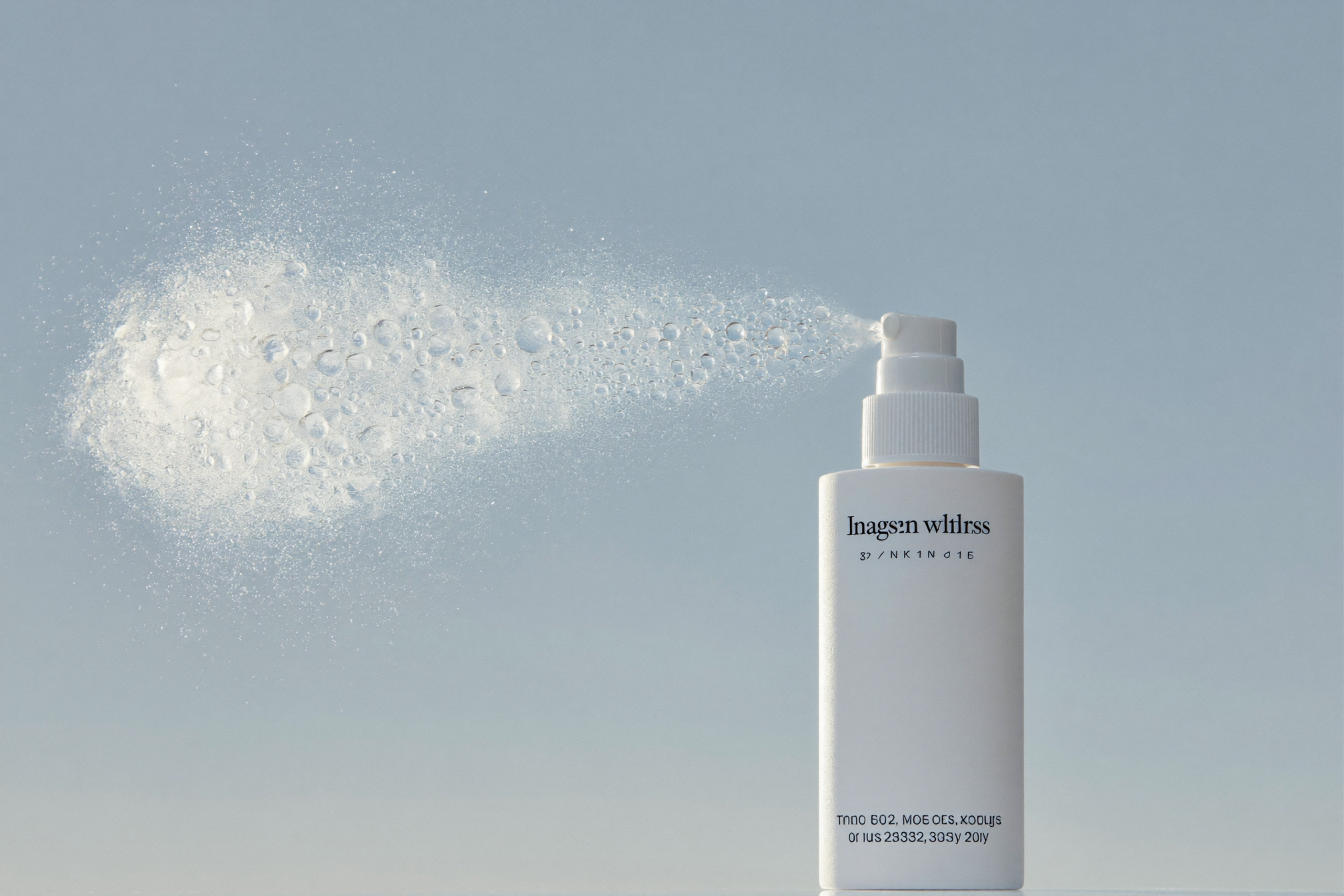
Once a decade, an ingredient jumps from hospital supply closets to vanity shelves. This year it’s hypochlorous acid — searches are up over 130% year on year, and the little spray bottles are suddenly everywhere: gym bags, bridal touch-up kits, the dressing tables of people with famously reactive skin. Unusually for a viral ingredient, the science underneath is solid. Here’s the honest briefing.
What it is
Hypochlorous acid (HOCl) is a gentle antimicrobial your own white blood cells produce to fight bacteria — which is why formulations of it have been used for years in wound care and post-procedure clinics. Bottled and stabilised, it’s a clear, water-light mist that kills acne-causing bacteria and calms inflammation without stinging, drying or disrupting your barrier. It is, essentially, the anti-alcohol toner.
What it’s actually good for
The strongest use cases: post-workout spritzing when you can’t wash your face (it neutralises the bacteria that turn sweat into breakouts), calming freshly irritated or over-exfoliated skin, post-shave or post-wax redness, maskne territory, and as the gentlest first step back after a retinol overdo. Brides, note it for the wedding morning: it soothes stress-flushed skin and plays perfectly under makeup because it’s basically structured water.
What it won’t do
It won’t dissolve blackheads, fade pigmentation, replace your cleanser, or out-perform a prescription for persistent acne. It’s a supporting actor — a very good one — not a headliner. Anyone selling it as a miracle for everything is selling the bottle, not the chemistry.
How to choose and use one
Look for a simple ingredient list — hypochlorous acid, water, salt, little else — at roughly 0.01–0.02% concentration, in an opaque bottle (light degrades it). Note the expiry: HOCl is less shelf-stable than most skincare, so buy small and replace on schedule. Use it on clean or mid-day skin as a mist, let it dry, and layer anything you like on top. Two to four spritzes; there’s no benefit to soaking.
The verdict
A rare thing: a trend that’s cheap, gentle, evidence-based and hard to misuse. It earns a slot in the gym bag and the bridal kit without displacing anything essential. In a year of climate-adaptive serums and AI skin scanners, the most sensible new arrival is basically supercharged salt water — and honestly, that tracks.
Where it fits into an existing routine
The spray’s superpower is that it fits everywhere without displacing anything. Morning: after cleansing, before serums — a calming reset that layers under everything. Midday: the no-sink refresh over makeup that actually does something antibacterial, unlike thermal water mists. Post-workout: the flagship use — spray, let dry, cleanse properly when you reach a sink. Evening: after cleansing on breakout-prone or freshly irritated skin, before the rest of the routine. During retinoid adjustment or skin cycling recovery nights, it soothes without interfering. What it never does is replace a step: cleansing, actives, moisturiser and SPF all keep their jobs. Think of it as skincare’s utility player — modest, versatile, useful in more situations than any specialist, star of none. That honest positioning is exactly why the trend deserves to outlast its virality.
Frequently asked questions
Can hypochlorous acid replace my toner?
If your toner exists to refresh and prep, yes, with antibacterial benefits added. If it exfoliates or hydrates with actives, they do different jobs — HOCl adds calm, not function.
Is it safe around eyes and on children?
Formulations of HOCl are used in eyelid hygiene and wound care precisely for their gentleness — consumer sprays are generally fine near (closed) eyes. For children’s skincare questions, the family doctor outranks the beauty aisle, always.
Why does my bottle smell faintly of pools?
A whisper of chlorine-adjacent scent is the chemistry being itself and fades instantly. A strong bleach smell, cloudiness or long-past expiry means the solution has degraded — replace it.
For the clinical baseline on this, see the AAD’s basic skin care guidance.