
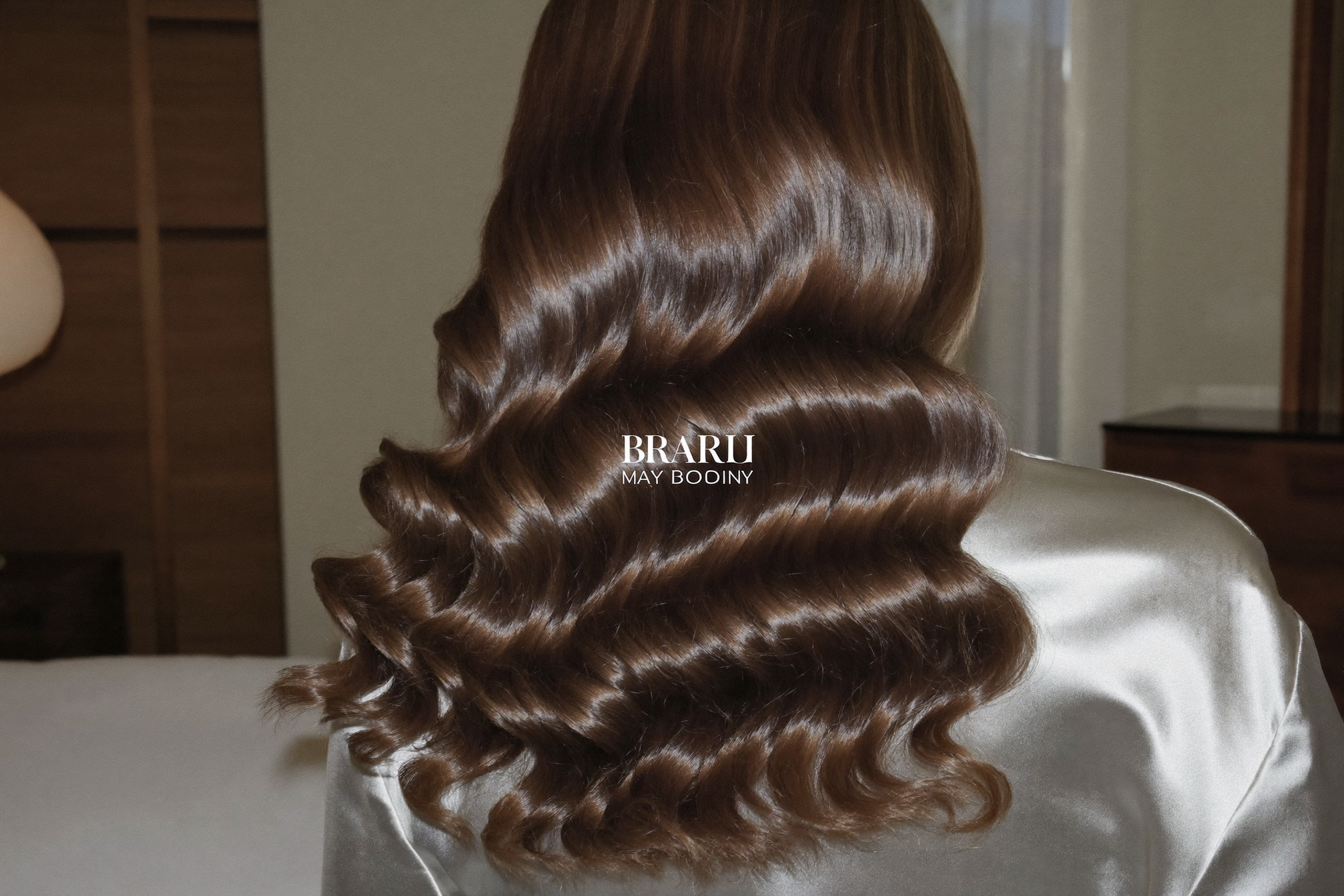
Heat styling gives instant results and long-term regrets. Heatless curls promise the opposite: a little patience overnight in exchange for waves that don’t cost you split ends. The catch is that the internet is full of methods that work beautifully on one hair type and fall flat on another. Here’s how to match the technique to your hair.
The silk robe-tie method: best for medium to thick hair
Place the sash of a robe (or a dedicated curling ribbon) over your head like a headband, then wrap sections of slightly damp hair around it away from your face, securing the ends with scrunchies. Sleep, unwrap, shake out. The result is bouncy, uniform waves. Thick hair holds this shape well; use larger sections for loose Hollywood waves, smaller for spirals.
Braids: best for fine or easily-weighed-down hair
Fine hair often can’t support heavy overnight sets, but braids are light and forgiving. Two loose French braids give soft, beachy texture; three or four tighter braids give crimped volume. Braid hair when it’s about eighty percent dry — soaking wet hair won’t dry overnight and fully dry hair won’t set.
Flexi rods and curlers: best for curl-resistant hair
If your hair drops curls by lunchtime, you need the firmer set of foam rollers or flexi rods, plus a light mousse applied before rolling. The mechanical hold plus a styling product creates memory that survives humidity far better than ribbon methods. Sleep in a silk bonnet to keep the set from frizzing.
The rules that apply to everyone
Start with almost-dry hair, not wet. Always finish with a cool blast of air in the morning if you can — it helps seal the cuticle. Unravel curls with fingers, never a brush, and set with a flexible-hold spray only after the curls have cooled and dropped for ten minutes. If you want the set to last a second day, pile hair into a loose pineapple on top of your head before bed.
Managing expectations
Heatless methods create waves and curls; they don’t create permanent texture change, and results vary with weather, hair porosity and how well you slept. Give any method three attempts before judging it — the first try is practice, the second is adjustment, and the third is the honest result.
Troubleshooting the three classic failures
Flat roots come from wrapping too tightly at the crown — leave the first inch of hair out of the set, then lift roots with fingertips in the morning. Kinks at the ends mean the tips escaped the wrap; fold ends fully around the ribbon or roller and secure with the scrunchie over them, never an elastic with metal. And waves that collapse by noon almost always went to bed too wet: the middle of the hair felt dry while the under-layers stayed damp, and damp hair unsets itself. The fix is patience at the front end — a further twenty minutes of air-drying before wrapping (our air-drying guide pairs perfectly here) buys hours of hold at the other end.
Frequently asked questions
Can I do heatless curls on freshly washed hair every night?
Yes — that’s the point. No heat means no cumulative damage, and the mechanical stress of loose wrapping is minimal. Rotate looser and tighter sets if you want variety.
My hair is layered — any adjustments?
Wrap in smaller sections so short layers stay captured, and set the front pieces separately toward your face for a softer frame.
Which method survives sleep best for restless sleepers?
Braids, hands down. Ribbon sets can shift if you toss; braids genuinely cannot escape.
For the clinical baseline on this, see the AAD’s everyday scalp and hair care guidance.
KEEP READING — curls hold better on the right wash schedule — see how often you should wash your hair.