
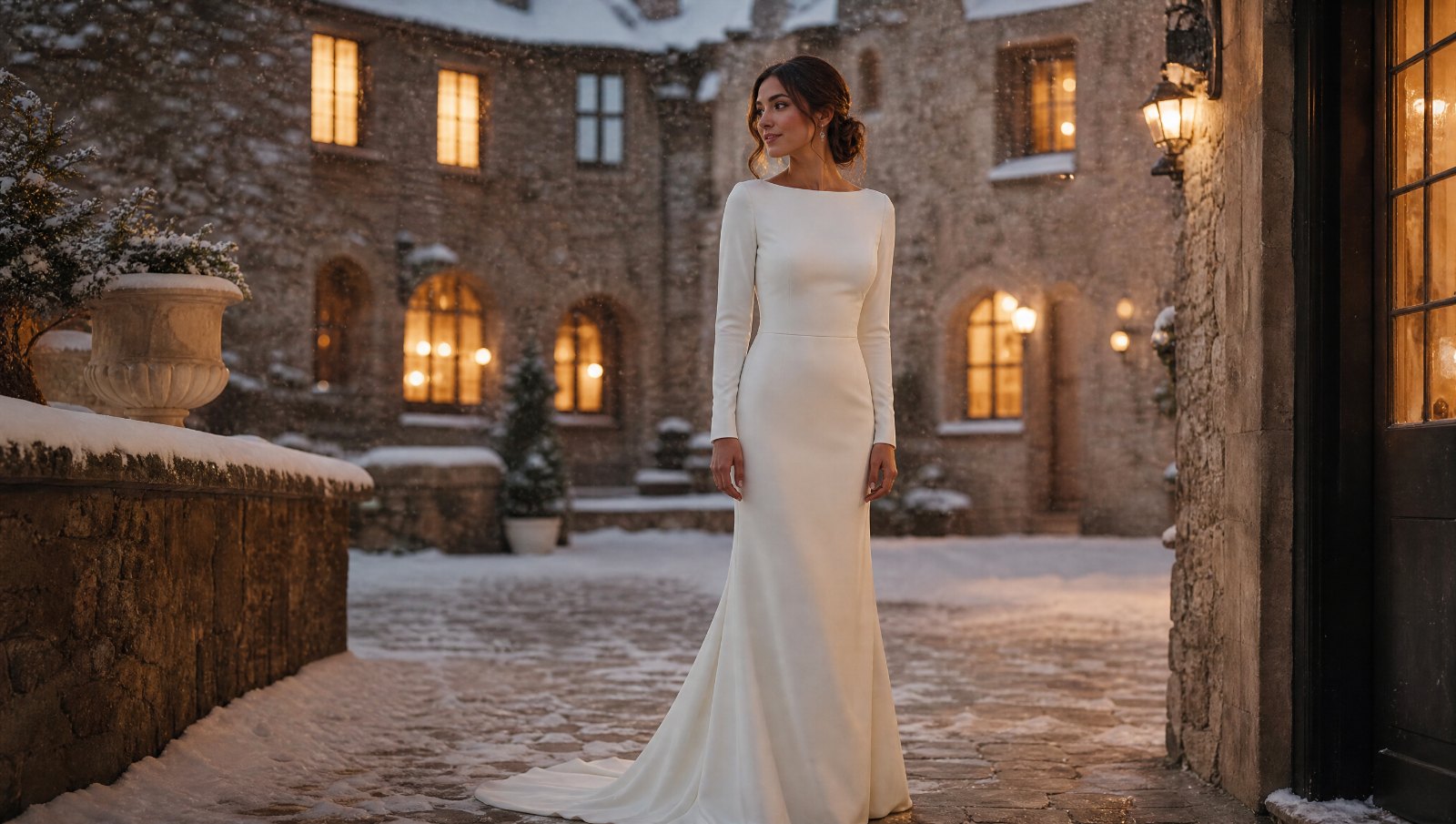
A winter wedding asks more of a dress than any other season. It has to photograph well in low light, move between a cold doorway and a warm ballroom, and keep you comfortable for ten hours. The good news is that the styles designers are showing right now suit cold weather better than they have in years: sleeves are back, fabrics are heavier, and cover-ups are treated as part of the outfit instead of an afterthought.
We went through current bridal collections, salon guides and the Spring and Fall 2027 runway reports to pull out the looks that work for a wedding between November and February. Below are seven of them, plus a fabric guide, a warmth plan and the mistakes we see winter brides make most often.
The short answer
| Your venue | Start with | Why it works |
|---|---|---|
| Ballroom or hotel, black tie | Structured satin or mikado ballgown | Heavy fabric holds its shape and suits formal rooms |
| Church or historic building | Long-sleeve lace or crepe | Coverage for cool, draughty interiors |
| Mountain lodge or outdoor portraits | Lined gown plus cape or wrap | You can add and remove warmth quickly |
| City hall or restaurant | Crepe column or tailored midi with a coat | Easy to move in, easy to layer |
| New Year’s Eve party | Beaded or sequin gown, detachable sleeves | Catches candlelight, converts for dancing |
1. The long-sleeve crepe column
If you try on one winter style, make it this one. A fitted crepe gown with full-length sleeves is clean, warm and almost impossible to date in photos. Long sleeves lead most winter bridal edits this season, from sleek fitted versions to softer bishop shapes. Crepe has enough weight to skim the body without clinging, and it does not crease badly when you sit.
Best for: minimalists, city weddings, brides who want one dress for the whole day.
Watch for: sleeve fit. You should be able to raise your arms for a hug without the bodice lifting.
2. Off-the-shoulder lace with long sleeves
This is the romantic counterpart to the crepe column. Kleinfeld’s winter edit leans on exactly this shape: an off-the-shoulder neckline, long lace sleeves and an A-line skirt, which the salon ties to black-tie winter celebrations. You get the feeling of bare shoulders with real coverage on the arms.
Best for: church ceremonies and formal evening receptions.
Watch for: scratchy lace. Ask for a soft lining inside the sleeve if the lace irritates your skin after ten minutes in the fitting room. It will not improve after ten hours.
3. The structured satin ballgown
Winter is the one season where a heavy gown is a comfort and not a burden. Mikado and thick satin hold a full skirt without layers of stiff netting, and the fabric itself blocks cold air. This also lines up with what is coming next: 2027 collections are full of ballgowns, oversized bows and longer trains.
Best for: ballrooms, cathedrals, big guest lists.
Watch for: weight. Walk, sit and climb a step in the sample before you commit. Ask how the train bustles.
4. The sculpted corset and drop waist
Bridal forecasts for winter 2027 point to sculpted dresses: corsets and structured bodices with draping and a dropped waistline. A boned bodice feels secure under a wrap or coat because nothing shifts when you take the layer off. It is the most fashion-forward option on this list, and it photographs sharply in flash.
Best for: brides who want shape and drama.
Watch for: sitting comfort. A long, rigid bodice can dig in at dinner. Sit down in it for a full two minutes.
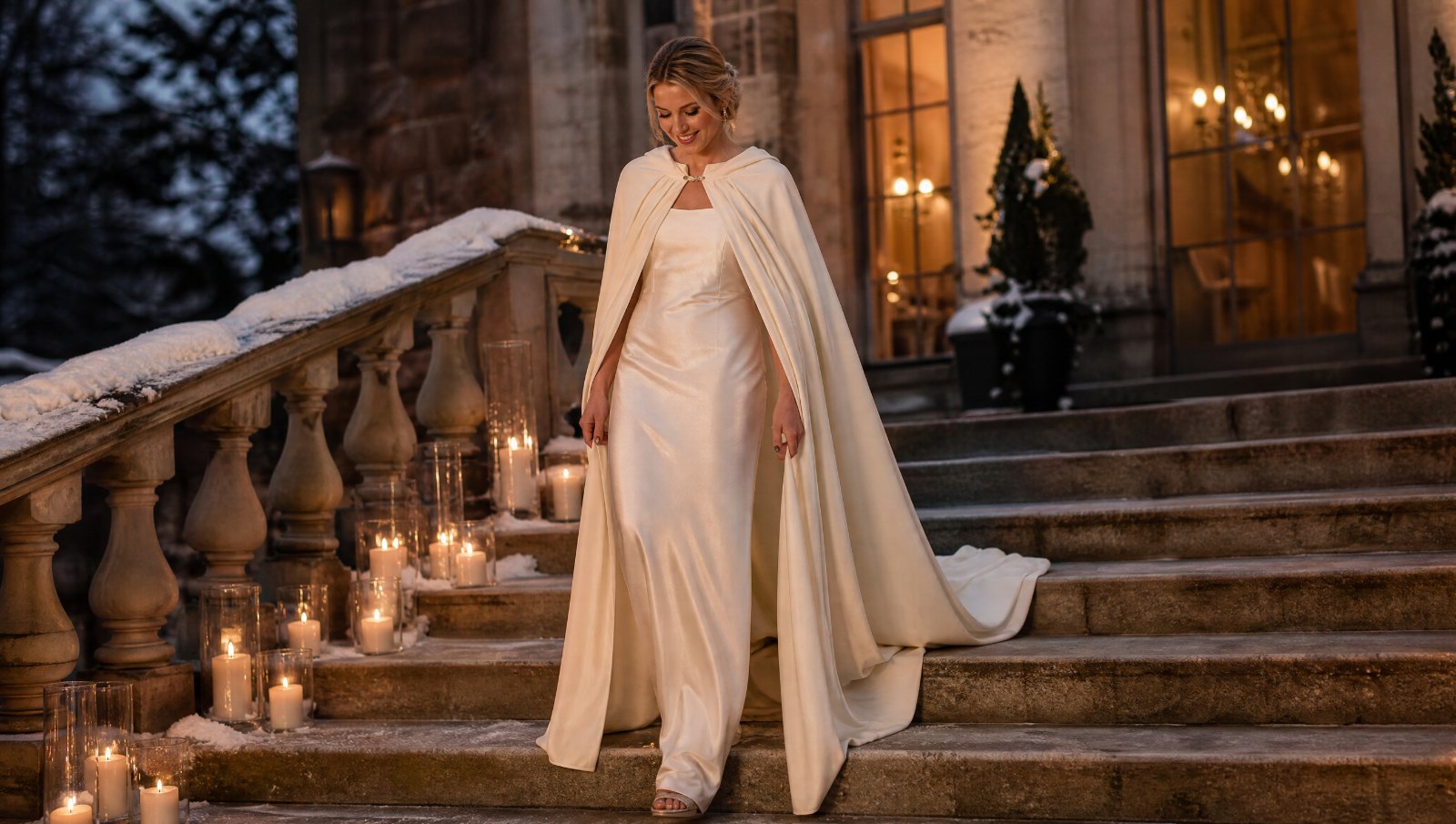
5. The slip dress with a cape
Capes are the cover-up of the season. A cape keeps the line of the gown visible, which a jacket or coat does not, and it adds movement in photos. Stylists are using long, dramatic capes and wraps as part of the look itself. Pair one with a simple satin slip and you have two outfits: covered for the ceremony, bare for the dance floor.
Best for: brides who run warm indoors, and anyone on a budget, since a simple gown plus a cape often costs less than a heavily worked dress.
Watch for: fastening. A cape that ties at the throat can press on your neck. Shoulder-attached styles are more comfortable.
6. Velvet, used carefully
Velvet suits winter naturally. It is warm, rich in candlelight and rare enough in bridal to feel personal. A full velvet gown is a strong statement, so many brides use it in smaller doses: a velvet bodice with a tulle skirt, a velvet wrap, or a velvet reception dress.
Best for: evening and candlelit weddings, December dates.
Watch for: flash photography. Velvet can show pressure marks and looks flat under harsh light. Ask your photographer how they would light it.
7. The convertible gown
Detachable sleeves, overskirts and removable trains solve the main winter problem, which is that the ceremony and the reception are often two different temperatures. Start covered, finish light. We compared the options in detail in our guide to detachable sleeves vs overskirts.
Best for: long days with outdoor photos.
Watch for: how the pieces attach. Practice removing them with the person who will actually help you on the day.
Fabrics: what keeps you warm
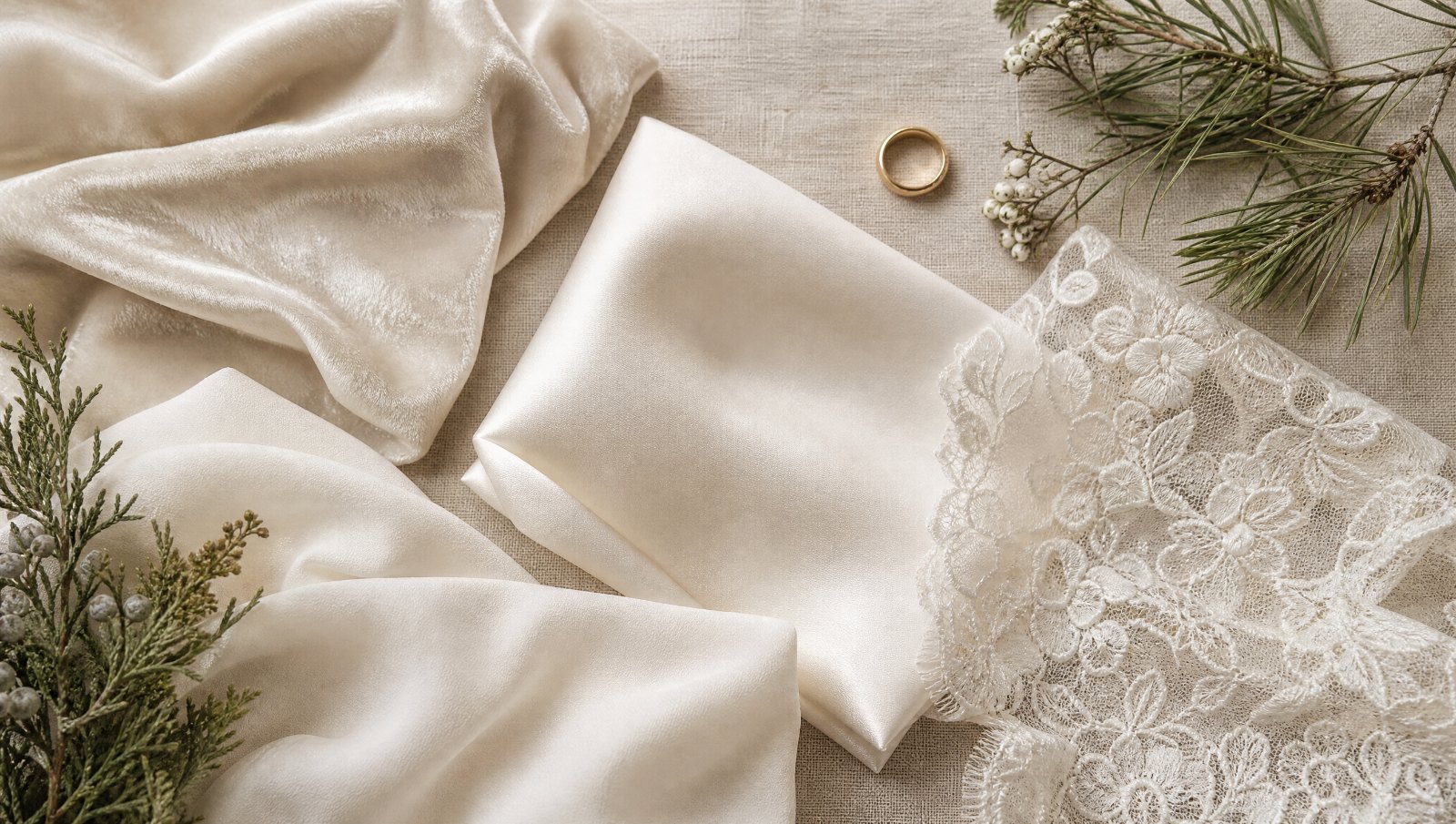
| Fabric | Warmth | Good to know |
|---|---|---|
| Mikado / heavy satin | High | Structured, smooth, resists wrinkles |
| Velvet | High | Rich in low light, marks easily |
| Crepe | Medium | Drapes well, comfortable to sit in |
| Lined lace | Medium | Depends entirely on the lining |
| Tulle / chiffon / organza | Low | Beautiful, but plan a serious cover-up |
One question worth asking at every appointment: can the gown be lined or interlined? A thin thermal layer inside the skirt adds warmth without changing how the dress looks from outside.
How to stay warm without hiding the dress
- Build from underneath. Skin-tone thermal leggings or fleece-lined tights disappear under a full skirt.
- Choose closed shoes. Block heels or bridal boots for outdoor photos, then change inside. More in our comfort-first shoe guide.
- Pick one cover-up for photos and one for warmth. A cape or faux-fur wrap for pictures, a real coat waiting in the car.
- Keep hand warmers in a pocket or your bouquet wrap. Cold hands show in photos as red knuckles.
- Shorten outdoor portraits. Plan two ten-minute sessions instead of one long one, and schedule them before sunset. Winter light fades early.
A note on colour
White and ivory look crisp against snow, but winter is also the easiest season to wear soft colour. Pale, icy blue is showing up across winter wedding styling this year, and several 2027 collections moved away from pure white toward blush, champagne and blue tints. If full colour feels like too much, try it in the veil, the cape lining or the shoes. Our 2027 veil trends guide has ideas.
When to order
Made-to-order gowns usually take several months to arrive, and alterations need more time after that. If your wedding is this winter and you have not ordered, ask salons about off-the-rack samples, rush options and ready-to-ship collections. If your date is next winter, shopping in spring gives you a comfortable margin. Our first appointment guide covers what to bring and what to ask.
Five mistakes winter brides make
- Dressing for the photo, not the day. A strapless tulle gown in January means you will be cold in every outdoor picture.
- Leaving the cover-up to the last week. It needs to be fitted with the dress, especially over sleeves or a full skirt.
- Forgetting the venue is heated. Heavy velvet in a packed ballroom gets hot. Plan a way to cool down.
- Ignoring the hem. Snow, slush and wet pavement stain. Ask about bustling the train for outdoor moments.
- Skipping a movement test. Sit, raise your arms and walk stairs in the sample.
FAQ
What is the best fabric for a winter wedding dress?
Mikado, heavy satin, crepe and velvet hold warmth best. Lace works well when it is fully lined.
Can I wear a strapless dress to a winter wedding?
Yes, if most of the day is indoors. Add a cape, wrap or detachable sleeves for the ceremony and outdoor photos.
Are long-sleeve wedding dresses actually warmer?
Solid crepe or satin sleeves are. Sheer lace or illusion sleeves add very little warmth, so treat them as a style choice.
What do brides wear over a wedding dress in winter?
Capes, faux-fur wraps, tailored bridal coats and cashmere shawls are the main options. Capes are the most popular right now because they do not hide the gown.
What colours suit a winter wedding dress?
Ivory and soft white are the classics. Champagne, blush and pale blue tints are growing, especially for evening ceremonies.
Our take
If we had to choose one direction, it would be a long-sleeve crepe or lined lace gown with a cape for the ceremony. It is warm enough for real winter weather, it works at almost any venue, and it will still look right in your photos in twenty years. Save the bare shoulders for the reception, when the room is warm and you are dancing.
Sources we used: Kleinfeld Bridal winter edit and velvet and cape guide, The Wed’s winter styling guide, Sherri Hill and Who What Wear 2027 bridal trend reports, and eRank’s winter wedding trend summary. Last reviewed November 2026.