December is the busiest proposal month of the year, which means a lot of people are about to spend serious money on a ring, often in secret, often in a hurry. If you’re the one shopping, or the one dropping hints, this guide is for you.
We looked at the newest data on what couples actually bought, plus the styles jewelers and designers are calling for 2027. Then we did what most trend lists don’t: we ranked each style by how well it wears day to day and how likely it is to still look right in 20 years.
The Numbers First: What Couples Are Actually Buying
The Knot’s latest Real Weddings Study, which surveyed more than 10,000 couples married in 2025 and was reported by Rapaport in February 2026, shows how fast the ring market has changed:
- 61% of center stones were lab-grown, up from just over half the year before.
- The average ring cost $4,600, down from $5,200 in 2024.
- The average center stone grew to 1.9 carats, up from 1.7.
- Lab-grown rings averaged $4,300 for about 2 carats, while natural diamond rings averaged $7,000 for about 1.6 carats.
- Round (26%) and oval (25%) were the top shapes, followed by emerald, princess, pear and marquise at 8% each.
- Yellow gold was the most popular metal at 39%.
Put simply: people are spending less and getting bigger stones, mostly because lab-grown diamonds have become far cheaper. That shift is driving nearly every trend below.
2027 Engagement Ring Trends at a Glance
| Trend | Everyday wear | Will it age well? | Best for |
|---|---|---|---|
| Oval and elongated stones | Excellent | Yes | Almost everyone |
| East-west settings | Very good | Likely | Fashion-forward, shorter fingers |
| Bezel and half-bezel | Excellent | Yes | Active hands, nurses, gym-goers |
| Yellow gold and chunky bands | Very good | Yes (the gold), maybe (the chunk) | Warm skin tones, vintage lovers |
| Toi et moi (two stones) | Good | Moderate | Couples who want a story ring |
| Modern three-stone | Good | Yes | Classic taste with a twist |
| Antique and old-cut stones | Good | Yes | Romantic, vintage style |
| Colored center stones | Depends on the stone | Moderate | Brides who want something personal |
1. Oval and Elongated Shapes
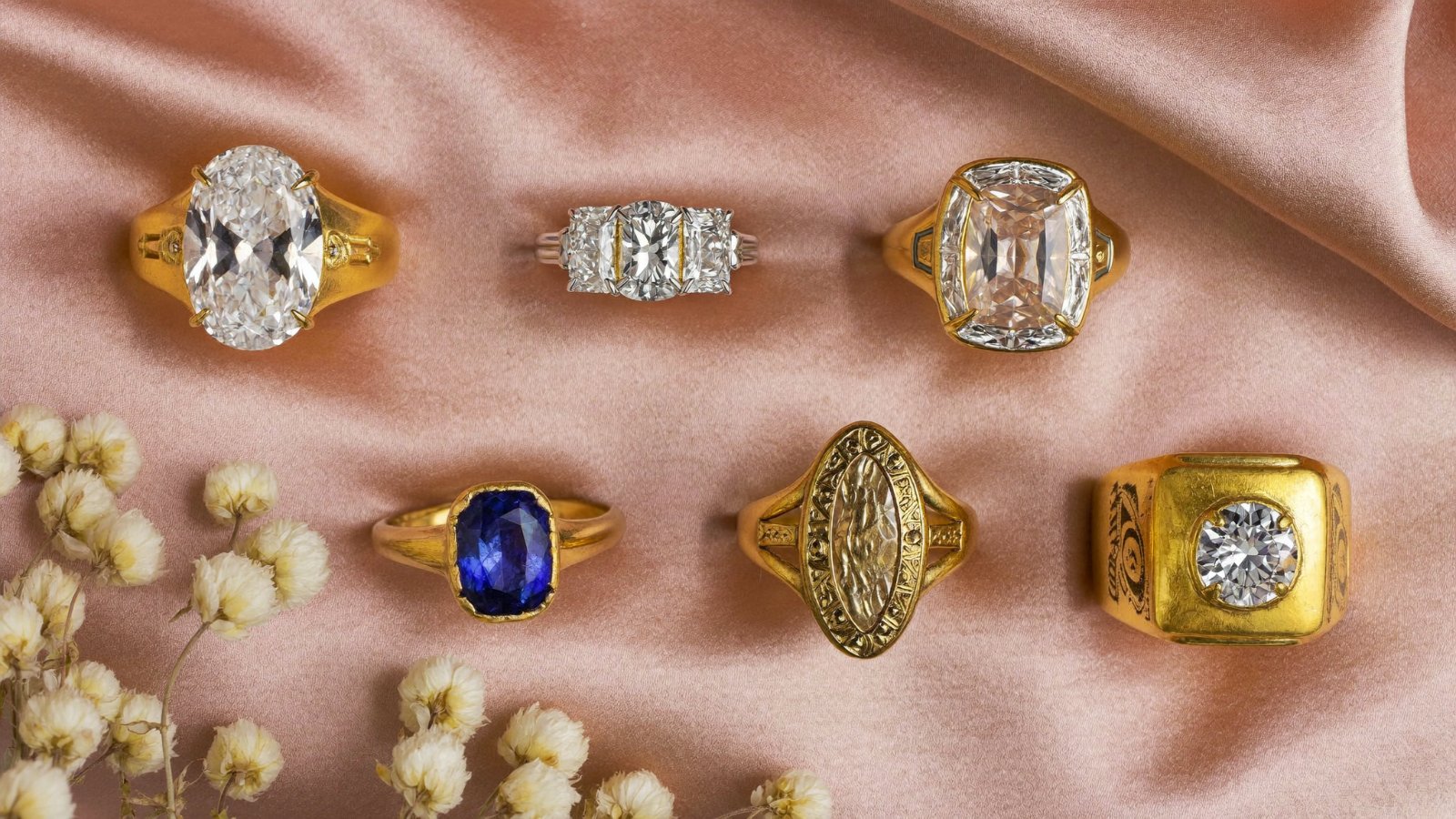
Oval is now almost tied with round as America’s favorite shape, and when you add emerald, pear and marquise, elongated stones make up the majority of center stones. They look larger than a round stone of the same carat weight because more of the surface faces up, and they lengthen the look of the finger.
Our take: this is the safest trend on the list. Ovals have been popular for over a decade and are now a classic in their own right.
Buying tip: ask to see ovals in person or on video. Many ovals show a “bow-tie,” a dark shadow across the middle. A faint one is normal; a heavy one makes the stone look dull from across the room.
2. East-West Settings
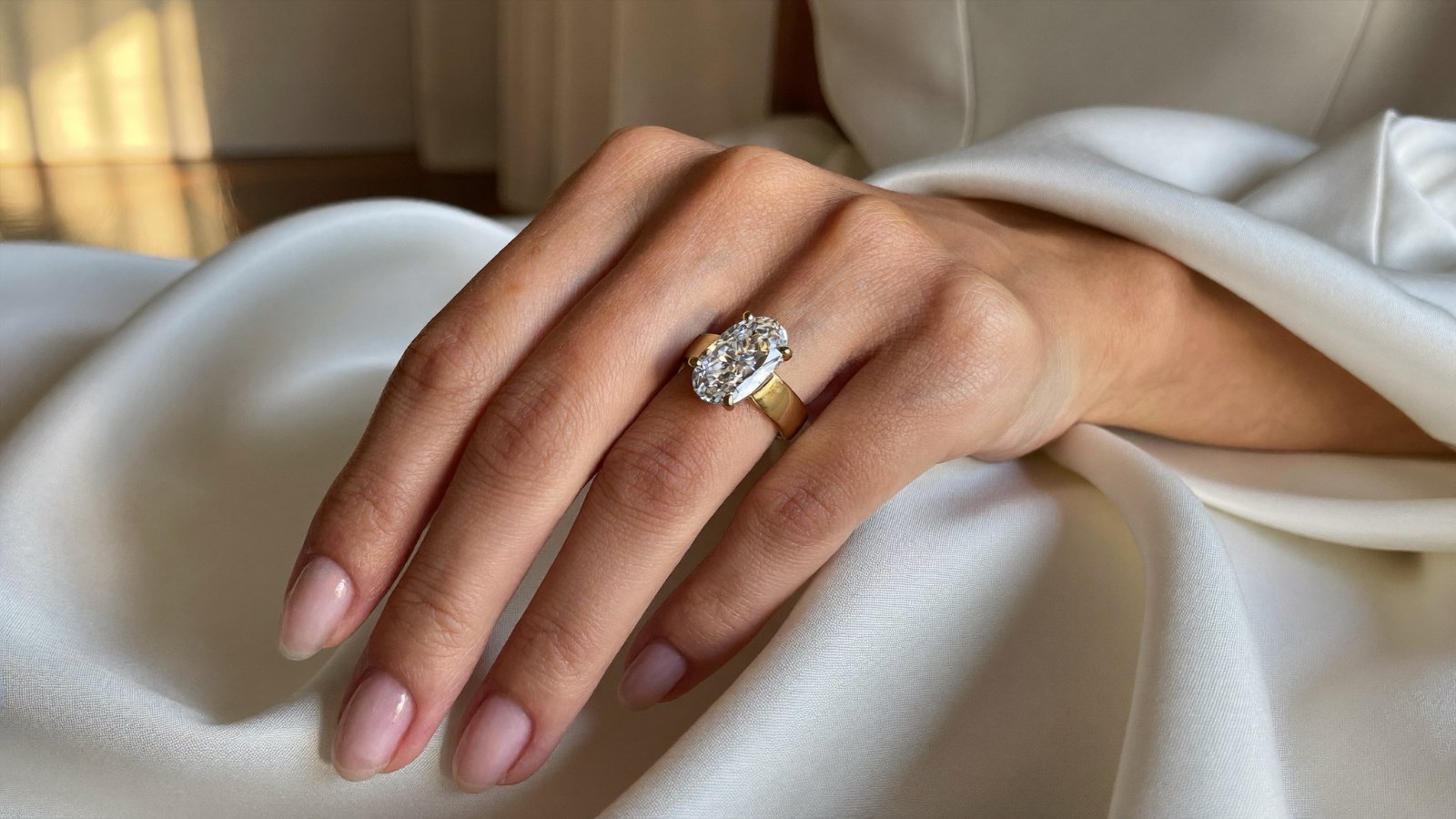
East-west simply means the stone is turned sideways, so an oval, emerald or marquise sits horizontally across the finger instead of pointing toward the nail. It’s subtle, a little unexpected, and photographs beautifully in hand shots.
Who it suits: people who want something different without going colorful or unusual. It can also flatter shorter fingers, because the stone doesn’t extend down toward the knuckle.
The catch: it only works with elongated shapes. A round or square stone looks the same in either direction. If you’re unsure about committing long term, ask the jeweler whether the head can later be turned to a traditional north-south setting.
3. Bezel and Half-Bezel Settings
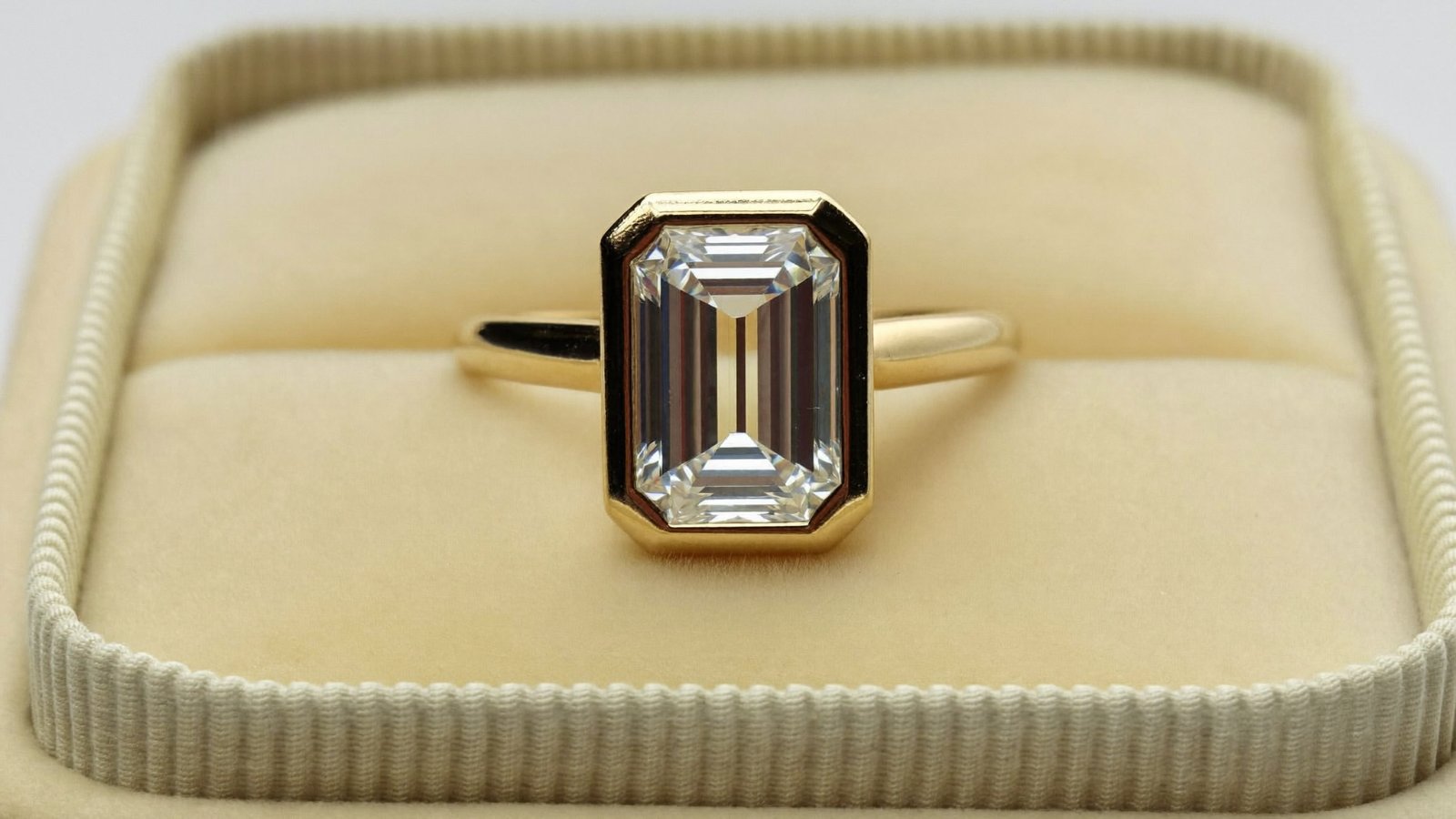
Instead of claws or prongs, a bezel wraps the stone in a thin rim of metal. A half-bezel covers only two sides. Bezels are having a moment because they are sleek, modern and very practical.
Why we like it: there are no prongs to catch on sweaters, hair or gloves, and the stone’s edge is protected from knocks. If you work with your hands, wear gloves at work, or go to the gym a lot, it’s the setting we’d recommend most.
The trade-off: a full bezel lets in slightly less light from the sides, so the stone can look a little less sparkly. A half-bezel is the best middle ground.
4. Yellow Gold and Chunkier Bands
Yellow gold was the most popular ring metal in The Knot’s study, and its share has grown steadily over five years. Bands are getting wider too, partly because lab-grown stones cost less, so more of the budget can go into the metal and design.
Our take: yellow gold is a long-term classic, so you’re not taking a risk there. Very chunky bands are more of a current look. A medium-width band (around 2 to 3 mm) is a good balance if you want the trend without going all in.
Practical note: remember the wedding band. A very wide engagement ring can make it hard to wear a band beside it comfortably. Try both together before you buy.
5. Toi et Moi: Two Stones, One Ring
“Toi et moi” is French for “you and me.” It’s a ring with two center stones side by side, often in different shapes, such as a pear and an oval, or a diamond and a colored stone. It got a big boost from celebrity engagements in recent years and is still widely featured in 2027 trend reports.
Who it suits: couples who like the symbolism, or who want to use two meaningful stones, such as two birthstones or a family diamond paired with a new one.
Our honest view: it’s beautiful but more of a statement piece. If you love it, wear it. If you’re buying it as a surprise, make sure your partner has actually saved one on Pinterest first.
6. The Modern Three-Stone
The three-stone ring is back, but updated. Instead of three matching rounds, think an oval center with half-moon, trapezoid or baguette side stones, sometimes with a touch of color on the sides.
Our take: this is the trend we’d pick for someone with classic taste who still wants their ring to feel current. The symbolism (past, present and future) also makes it a popular choice for anniversary upgrades.
7. Antique and Old-Cut Stones
Old mine and old European cuts, along with antique-inspired cushions, give a softer, glowing sparkle compared with the sharp flash of a modern brilliant cut. Many jewelers now offer lab-grown stones cut in these vintage styles too.
Who it suits: anyone drawn to romantic, heirloom style, and couples planning a vintage-inspired wedding. Pair it with yellow gold or a hand-engraved band for the full look.
8. Colored Center Stones
Sapphires, emeralds, morganite and other colored gems are a popular alternative for people who want something personal. They also connect to the bridal fashion shows, where blush and color were everywhere this year.
The honest warning: not every gemstone is tough enough for daily wear. Sapphires and rubies are very durable. Emeralds and morganite are softer and more likely to chip or scratch. If you choose a softer stone, a protective setting like a bezel helps a lot.
Lab-Grown vs Natural: How to Decide
This is the biggest decision most ring shoppers face. Here’s a simple way to think about it:
- Choose lab-grown if you want the biggest, cleanest stone for your budget, or you prefer to put more money toward the wedding, a honeymoon or a home. Lab-grown diamonds are real diamonds, chemically and physically, just made in a lab.
- Choose natural if rarity and tradition matter to you, or you want a stone that is more likely to hold some value over time. Lab-grown prices have fallen sharply and are expected to keep changing, so think of them as something to love, not an investment.
- Either way, ask for a grading report from a recognized lab such as GIA or IGI, and make sure the jeweler clearly states whether the stone is lab-grown or natural.
Holiday Proposal Checklist
If you’re planning to propose over the holidays, timing is everything. Use this checklist:
- Order early. Custom and resized rings can take several weeks, and jewelers get busy in December. If you’re proposing on Christmas or New Year’s Eve, aim to order by mid-November.
- Get the ring size right. Borrow a ring she wears on her ring finger, or ask a close friend to help. When in doubt, size slightly up, since it’s easier to size down later.
- Check the return and resizing policy before you buy, especially for online orders.
- Insure the ring as soon as you have it, not after the proposal.
- Plan for photos. If you’re hiring a photographer or filming the moment, a clean manicure and good natural light make a huge difference.
Just got engaged? Our guide to engagement photo makeup will help you look like yourself in your announcement photos, and our wedding dress shopping guide covers what to know before your first appointment.
Which 2027 Ring Trend Matches Your Style?
- Classic and timeless: oval solitaire, thin platinum or yellow gold band.
- Modern minimalist: bezel-set emerald cut, sleek band.
- Fashion-forward: east-west marquise or toi et moi.
- Vintage romantic: old European cut in yellow gold with an engraved band.
- Personal and colorful: sapphire three-stone with diamond side stones.
Frequently Asked Questions
What is the most popular engagement ring shape right now?
Round and oval are nearly tied. In The Knot’s latest study, round made up 26% of center stones and oval 25%. Oval is the most popular shape for lab-grown diamonds.
How much does the average engagement ring cost?
The average engagement ring cost $4,600 for couples married in 2025, according to The Knot. Lab-grown rings averaged $4,300 and natural diamond rings averaged $7,000.
Are lab-grown diamonds real diamonds?
Yes. Lab-grown diamonds have the same chemical and physical properties as natural diamonds. The difference is their origin, and usually their price.
Is yellow gold back for engagement rings?
Yes. Yellow gold was the most popular engagement ring metal at 39% in The Knot’s latest study.
Which engagement ring trend will last the longest?
In our view, oval stones, bezel settings, yellow gold and modern three-stone designs have the best staying power. Very chunky bands and toi et moi rings are more tied to the current moment.
Sources: The Knot Real Weddings Study (couples married in 2025), as reported by Rapaport, February 2026; 2027 engagement ring trend coverage from Bespoke-Bride and jeweler trend reports, October 2026. Prices change frequently, so check current pricing with your jeweler.