
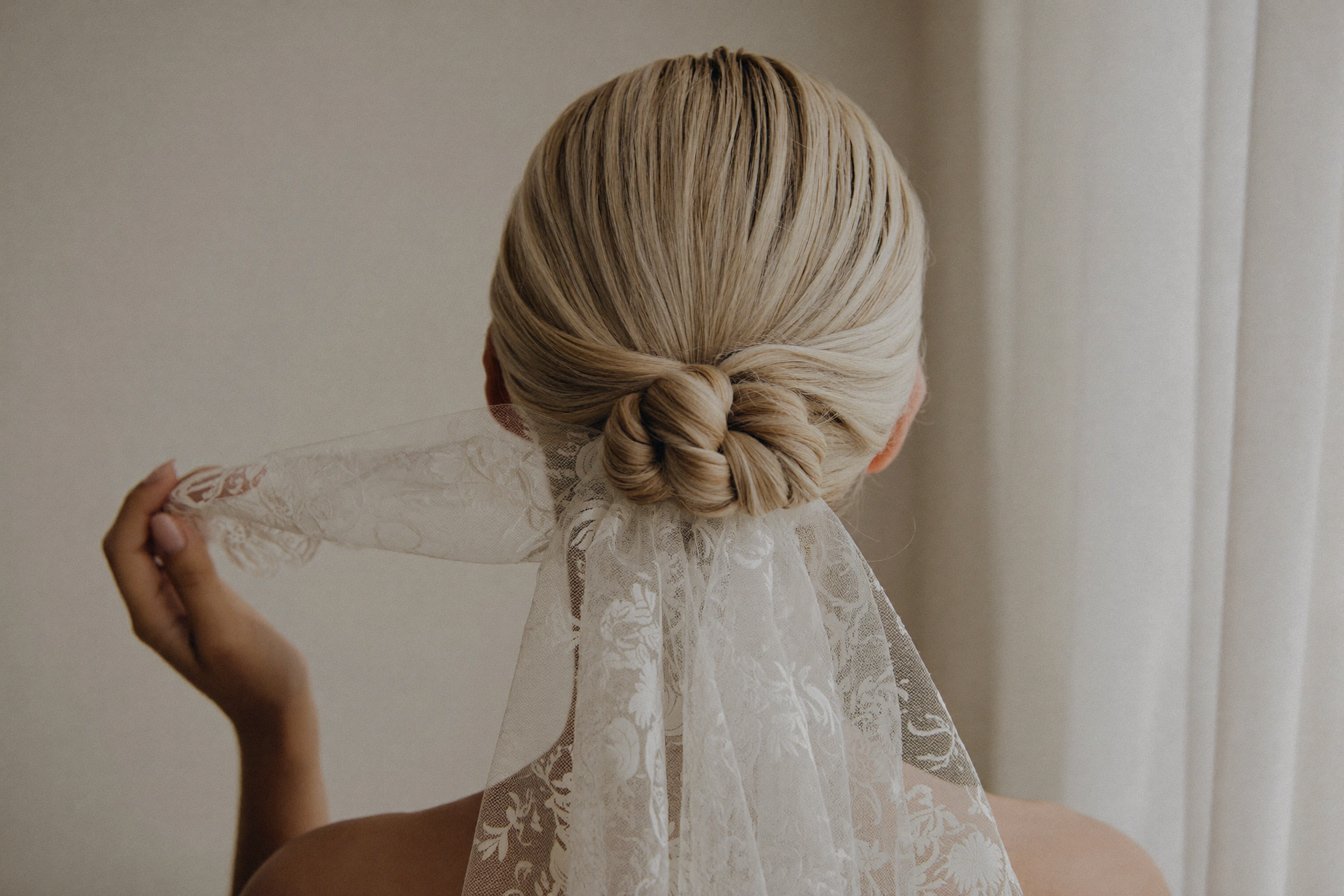
The veil question splits every bridal consultation I’ve ever sat in on. Half of brides have dreamt about one since childhood; the other half feel like they’re wearing a curtain. The good news: you don’t actually have to decide before you choose a hairstyle. You just need a style that works both ways.
The low chignon: the diplomat
A low, slightly loose chignon is the hairstyle equivalent of a neutral wardrobe. Veil comb slides in above the bun for the ceremony, slides out for the party, and the shape stands entirely on its own. If you’re doing a veil for vows and dancing until midnight, this is the one I’d steer you toward without hesitation.
Hollywood waves: gorgeous, with a catch
Deep side waves photograph like a dream and need no accessory to feel finished. The catch is that a heavy cathedral veil can flatten the crown section it clips over, so if waves are the plan, keep the veil light — tulle, single tier — and have your artist place the comb where the wave lifts, not where it lies flat. Ask them to show you at the trial. A good artist will do it before you ask.
The half-up: most forgiving, least discussed
Half-up styles hide a veil comb better than anything, because the pinned section creates a natural shelf. They also survive the comb’s removal without a trace, which is not true of every updo — some look faintly deflated once the anchor comes out. If you’re nervous about the mid-reception switch, half-up removes the risk.
What I’d skip if a veil is even a maybe
High skinny buns and very tight snatched styles. The comb has nowhere to grip, so artists end up anchoring the veil into the tension of the style itself — and when it comes out, the silhouette comes with it. Beautiful without a veil. Just commit to one answer first.
And if you’re still torn the week before: bring the veil to your final fitting, put it on with your hair roughly styled, and look for ten seconds. Your face will answer. It always does.
Matching veil weight to hairstyle strength
Think of the veil-hair relationship as an engineering problem: the style must anchor the veil’s weight all day without deforming. A single-tier tulle veil weighs almost nothing and works with any style that accepts a comb. Two-tier veils with satin edging pull noticeably — they want a braided or pinned anchor point, not just teased volume. Cathedral lengths with lace borders genuinely drag: they need the structural support of a proper updo, and on fine hair, a hidden padded base your stylist can build in minutes. If you have fallen for a heavy heirloom veil, tell your stylist before the trial rather than at it — the style will be designed around the veil rather than fighting it. And always rehearse the removal: the mid-reception veil exit should take your maid of honour ten seconds, not a search party.
Frequently asked questions
Where exactly does the comb sit?
Three standard spots: crown for drama and height, back of the head at the gathered point of the style for the classic look, and underneath the updo for a veil that trails without adding height. Ask to try all three at the trial.
Can I wear a veil with completely loose hair?
Yes, with a light veil and a hidden anchor braid at the crown for grip — plus realistic expectations in wind. Outdoors, loose-hair veils photograph as either magic or chaos, decided entirely by the weather.
Veil first or accessories first?
Veil placement first, then pins and sparkle around it. Accessories are adjustable; the anchor point is not.
For the clinical baseline on this, see the AAD’s everyday scalp and hair care guidance.