
Every bridal fashion week produces a trend report. Most of them read like a list of runway adjectives: ethereal, romantic, modern, bold. Useful if you’re a buyer for a boutique. Less useful if you’re a bride with a budget, a venue, and a first appointment next month.
This guide is different. We went through the two New York Bridal Fashion Week seasons that shape 2027 weddings: the Spring 2027 shows in April 2026 and the Fall 2027 shows in October 2026. Then we asked the question trend reports skip: which of these will actually work for a real wedding, and which will look dated in your photos by 2032?
Each trend below gets a wearability verdict, who it suits, and what to ask for at your appointment so you walk in speaking the language.
The Short Version: 2027 Bridal Trends at a Glance
| Trend | Seen at | Wearability | Ages well in photos? |
|---|---|---|---|
| Visible corsetry and boning | Berta, Ines Di Santo, Justin Alexander, Alon Livné | High | Yes, if the fit is perfect |
| Basque and drop waists | Galia Lahav, Justin Alexander Poeza, Alyssa Kristin | Medium | Yes |
| ’90s liquid-satin minimalism | Monique Lhuillier, Alexandra Grecco, Pronovias | High | Very likely |
| 3D florals and rosettes | Nardos, Tanner Fletcher, Wang Feng, Esé Azénabor | Medium | Depends on scale |
| Bows (small to oversized) | Honor, Mira Zwillinger, Sareh Nouri, Lihi Hod | High (small), Low (oversized) | Small: yes. Giant: risky |
| Blush and pink gowns | Nardos, Hayley Paige, Jaclyn Whyte, Anne Barge | Medium | Soft blush: yes |
| Two-piece and separates | Lihi Hod, Alexandra Grecco, Lee Petra Grebenau | Medium | Best as a second look |
| Convertible “quick change” gowns | Galia Lahav, Jaclyn Whyte, Sareh Nouri | High | Yes |
| Statement veils: hoods, hats, mantillas | Berta, Caroline Castigliano, Francesca Miranda | Medium | Mantilla: timeless. Hat veil: bold |
| Feathers, fringe and metallics | Nicole + Felicia, KYHA, Mark Ingram | Low to medium | Most likely to date |
1. Visible Corsetry: The Trend That Refuses to Leave
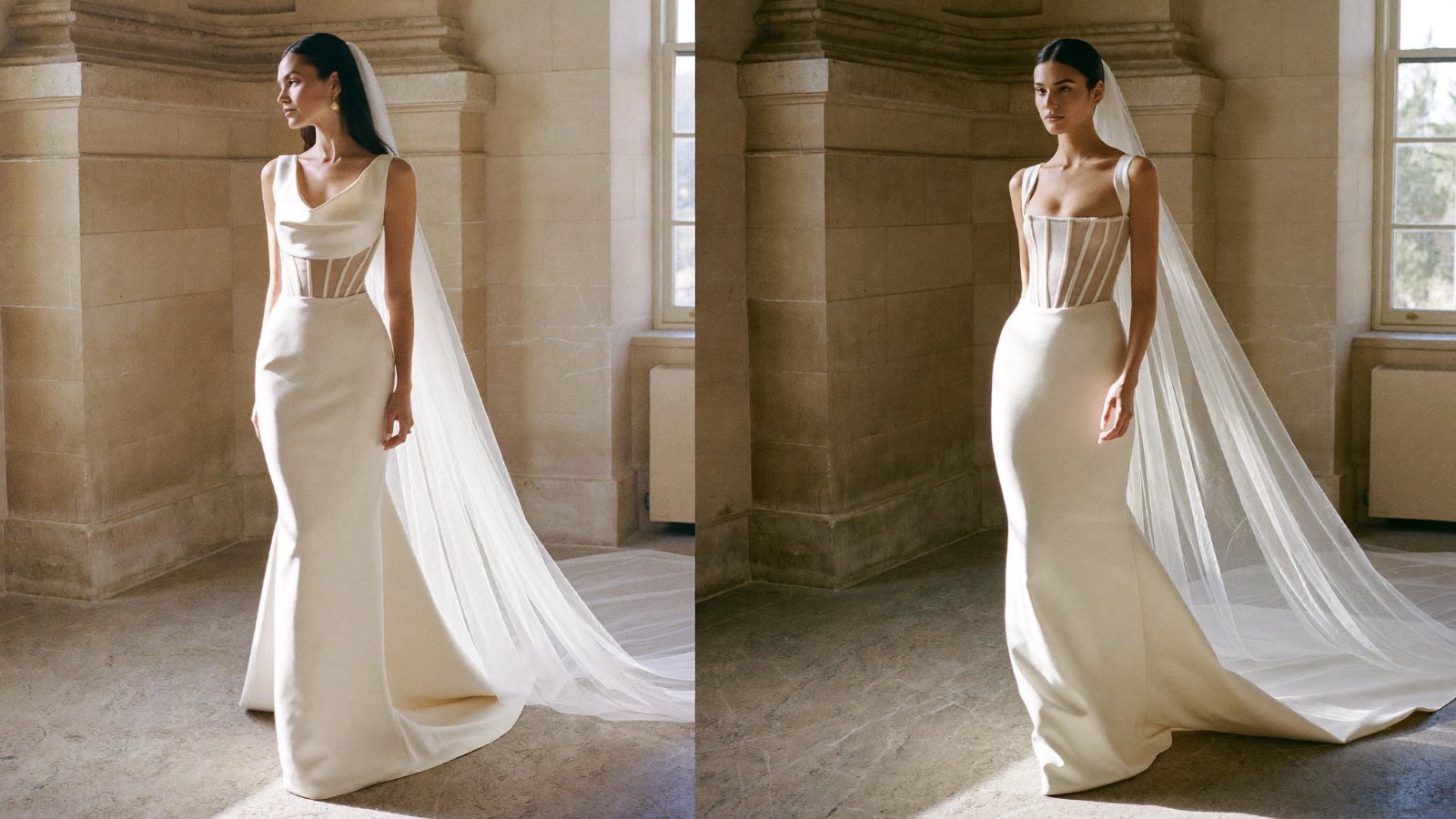
Corsetry has been on bridal runways for several seasons now, and both 2027 collections doubled down. At the Spring shows, Ines Di Santo, Alon Livné and Justin Alexander Signature all showed exposed boning. By October, Berta, Galia Lahav, Nicole + Felicia, Marrow and Kristie Romanos were still building collections around sculpted bodices.
Our take: this is no longer a micro-trend. It is the defining bodice of the decade, much like strapless sweetheart necklines defined the 2000s. That staying power is good news for your photos.
Who it suits: almost everyone, because boning shapes rather than squeezes. It is especially good for brides who want structure without a heavy ball gown.
The catch: a corset bodice lives or dies on alterations. A visible bone that buckles when you sit, or a sheer panel that gapes, will show up in every close-up.
Ask at your appointment: “Is the boning spiral steel or plastic?” and “How much can this bodice be taken in without moving the seams?” Spiral steel holds its shape through a 12-hour day; plastic boning can warp from body heat by the reception.
2. The Waistline Moves: Basque and Drop Waists
The natural waist is quietly losing its monopoly. Spring 2027 leaned hard on the basque waist, the V-shaped point that dips below the natural waistline. Galia Lahav, Alon Livné and Justin Alexander Poeza all used it. Alyssa Kristin and Mira Zwillinger pushed further into true drop waists.
Pair this with the hip-focused details several designers showed (draped hips, rosettes at the hip, gathered satin tied at one side) and the message is clear: the visual focus of a 2027 gown sits lower on the body.
Who it suits: a basque waist is one of the most flattering lines in bridal for elongating the torso. A full drop waist is trickier. It suits taller brides and straighter figures best, and can shorten the legs on petite frames.
Our verdict: choose the basque over the drop waist if you’re unsure. It has a long bridal history behind it, so it will not read as a “2027” choice in a decade.
3. ’90s Minimalism: The Carolyn Bessette Effect, Again
Running directly against all the corsetry and florals, a strong minimalist thread ran through Spring 2027. Monique Lhuillier showed a plunging satin style named “Tribeca.” Alexandra Grecco sent out a square-neck liquid-satin slip with a single rosette at the hip. Pronovias and Alon Livné also leaned into the clean, bias-cut look most people associate with Carolyn Bessette Kennedy’s 1996 wedding.
We’d call this the safest trend on the list. Slip dresses have come back roughly every decade since the ’90s for a reason: they photograph cleanly, move beautifully on video, and suit a courthouse wedding as easily as a black-tie ballroom.
Who it suits: brides who want their face, hair and jewelry to be the focus. It also suits destination and city weddings.
The honest warning: bias-cut satin is unforgiving. It shows every seam of your undergarments and every crease from the car ride. Budget for a steamer on the day and a proper fitting with your final shapewear.
If you’re planning a slip dress, your skin and makeup carry more of the look. Our 6-month bridal beauty timeline is a good place to start planning.
4. 3D Florals and Rosettes
If one detail tied both seasons together, it was dimensional flowers. In Spring, Nardos scattered pink and white roses across a ball gown skirt, Esé Azénabor covered a skirt with oversized blush roses, and Tanner Fletcher built florals onto garden-trellis lattice. In Fall, Wang Feng Couture added hand-painted botanicals and rosette skirts.
There is a real difference between the two versions of this trend. Scattered or placed florals (a rosette at the hip, blooms climbing one shoulder) look intentional and elegant. All-over oversized blooms are a fashion moment, and fashion moments date quickly.
Our verdict: go for a single statement placement rather than full coverage. One rosette at the hip or a cluster at the neckline gives you the 2027 feel with far less risk.
Practical tip: ask whether the florals are sewn or glued. Sewn appliqués survive dancing and bustling. Glued ones can pop off when the train gets stepped on.
5. Bows: Keep Them Small
The bow trend is coming off a big run in everyday fashion, and bridal designers ran with it. Honor showed crystallized bow embroidery and ribbon sleeve ties. Lihi Hod placed a single small satin bow at the waist of a strapless ball gown. Mira Zwillinger went the opposite way with an oversized satin bow at the hip that worked almost like a second skirt.
Here is our opinion, plainly: small bows are charming, giant bows are a gamble. A ribbon tie at the sleeve or a slim bow at the back reads as classic bridal detail. An oversized bow is the element most likely to make you wince at your photos in ten years, the way 2010s bridesmaid sashes do now.
Low-commitment option: get your bow fix from accessories instead of the gown. A bow-back veil, bow hair clips or satin gloves with bows at the wrist (as Tanner Fletcher showed) give you the trend for one day without committing the dress to it.
6. Blush, Pink and the End of “White Only”
Color was everywhere. Nardos showed a blush ball gown that deepened to lavender at the hem. Jaclyn Whyte’s “Madeline” moved from white lace at the bodice into pink lace on the skirt. In Fall, Hayley Paige showed an all-pink lace ball gown, Nicole + Felicia did a champagne-to-white ombré, and KYHA went full gold sequin.
Who it suits: blush is surprisingly practical. Pure white can wash out fair and very warm skin tones alike, while a soft blush or champagne base tends to flatter a wider range. It is also more forgiving in candlelit and golden-hour photos.
Our verdict: soft blush or champagne ages well. Saturated pink or ombré is a personality choice. Love it? Wear it. Just don’t choose it because it was trending this season.
Tip for your try-on: view blush gowns in natural window light, not just under boutique spotlights. Warm bulbs can make blush look ivory and ivory look yellow.
7. Two-Piece Looks and Bridal Separates
Separates kept growing in 2027. Lihi Hod paired a sheer lace crop top and cathedral lace train with white cargo pants, and in Fall showed jacket-and-tulle separates. Alexandra Grecco showed four separate looks in Spring, from a billowy silk top with a bias-cut satin skirt to a feather-trimmed deep-V top with wide-leg trousers.
Our take: separates are more useful than they look. Buying a top and skirt separately means each can be sized on its own, which helps brides whose upper and lower halves fall in different standard sizes. Some separates can also be re-worn later, with the top paired with jeans for an anniversary dinner.
Where they work best: as a reception, after-party or rehearsal-dinner look. For the ceremony itself, most brides still prefer a single-piece gown.
8. Quick-Change Gowns: Two Looks, One Dress
Detachable overskirts, removable corsets and toppers were all over Spring 2027, from Galia Lahav to Jaclyn Whyte to Sareh Nouri. This is the trend we recommend most, because it solves a real problem: brides want a dramatic ceremony look and a dance-floor look without buying two gowns.
We covered this in depth in our guide to detachable sleeves vs. overskirts. The short version: an overskirt gives you the bigger transformation, while detachable sleeves are easier to manage on the day.
Ask at your appointment: “How long does the change take, and does it need a second person?” Some overskirts attach with hidden hooks that take two minutes. Others need a full bustle-style rework.
9. Statement Veils: Hoods, Hat Veils and Mantillas
Fall 2027 put headwear in the spotlight. Berta showed lace hoods, Caroline Castigliano a wide-brim sheer tulle hat veil, and Francesca Miranda a lace mantilla over a mermaid skirt. Earlier in the year, Tanner Fletcher paired a quilted rose gown with a birdcage headpiece.
This is the easiest way to look current without risking the gown. A classic dress with a statement veil reads as 2027 on the day, and the photos still look timeless because the dress underneath is.
Our ranking for longevity: mantilla (centuries old, never dates), then cathedral veil, then lace hood, with the hat veil as the boldest choice. If you’re also deciding between veil and no veil, our guide to hairstyles that work both ways will help.
10. Feathers, Fringe and Metallics: Proceed With Care
Nicole + Felicia paired a sequined corset with a feathered high-low skirt. Berta added feathered backs. Silver and metallic tones showed up at Alon Livné, Mark Ingram Bride and Esé Azénabor, and KYHA’s gold ballgown was one of the most talked-about looks in October.
These are the details most tied to a specific moment in fashion. That doesn’t make them wrong. A New Year’s Eve wedding is the perfect excuse for a metallic gown. But be honest with yourself about whether you love it or love that it’s new.
Video note: feathers and fringe look incredible in motion, which is why they perform so well on TikTok and Reels. If your wedding has a planned entrance or 360-degree entrance moment, movement-based details are worth considering. For still photos, they can read as fuzzy or messy at the edges.
How to Use These Trends Without Regretting Them
After reviewing both seasons, here is the rule we’d give a friend: choose one trend for the dress, and put the rest in your accessories.
- Pick your “forever” element first. Silhouette and neckline are the parts you’ll judge hardest in 20 years. Keep those classic or choose the longest-lasting trends (corsetry, basque waist, slip dress).
- Add one statement detail. A rosette, a small bow, a blush tone, or a convertible overskirt. One, not four.
- Let the veil and accessories carry the moment. Hat veils, bow clips and satin gloves are where the most trend-driven ideas belong.
- Check the order timeline. Many bridal salons advise ordering a gown 8 to 10 months before the wedding, with alterations starting a couple of months out. Runway pieces can take longer, so confirm lead times before you fall in love.
- Bring screenshots, not adjectives. “Romantic” means something different to every consultant. A photo of a basque-waist corset bodice does not.
Which 2027 Trend Fits Your Wedding?
- Black-tie ballroom: corset bodice, basque waist, cathedral veil, metallic accessories.
- City or courthouse: ’90s slip, statement hat veil, minimal jewelry.
- Garden or spring wedding: blush tones, placed 3D florals, lace and tulle.
- Winter wedding: long-sleeve lace, lace hood or mantilla, champagne or ivory satin.
- Party-first reception: convertible gown or a two-piece second look with movement details.
Shopping for guests too? See our winter wedding guest dress guide and our breakdown of Fall 2026 bridal trends for the looks still in stores now.
Next up: pair your dress research with our 2027 engagement ring trends guide.
Frequently Asked Questions
What are the biggest wedding dress trends for 2027?
Across the Spring 2027 and Fall 2027 New York Bridal Fashion Week shows, the strongest trends were visible corsetry, basque and drop waists, ’90s-style satin slip dresses, 3D florals, bows, blush and pink gowns, two-piece separates, convertible gowns, and statement veils such as hoods, hat veils and mantillas.
Is the corset wedding dress trend still in style for 2027?
Yes. Corset and boned bodices appeared in both 2027 seasons from designers including Berta, Galia Lahav, Ines Di Santo and Justin Alexander. It has lasted long enough that it now looks more like a modern classic than a passing trend.
Are colored wedding dresses popular in 2027?
Blush, pink, champagne and even gold gowns appeared at several shows, including Nardos, Hayley Paige, Jaclyn Whyte, Nicole + Felicia and KYHA. Soft blush and champagne are the most wearable versions.
When should I buy my dress for a 2027 wedding?
Many bridal salons recommend ordering 8 to 10 months before your date to allow for production and alterations. For a spring or summer 2027 wedding, that means shopping now through early 2027. Always confirm the designer’s lead time at your appointment.
Which 2027 bridal trend will date the fastest?
In our view, oversized bows, all-over giant florals and heavy feathers are the most likely to look tied to this specific moment. Corsetry, basque waists, slip dresses and mantilla veils are the safest long-term choices.
Sources: runway coverage of New York Bridal Fashion Week Spring 2027 (April 2026) and Fall 2027 (October 2026) from Green Wedding Shoes and Inside Weddings. Designer details reflect runway collections and may vary from final retail versions.