
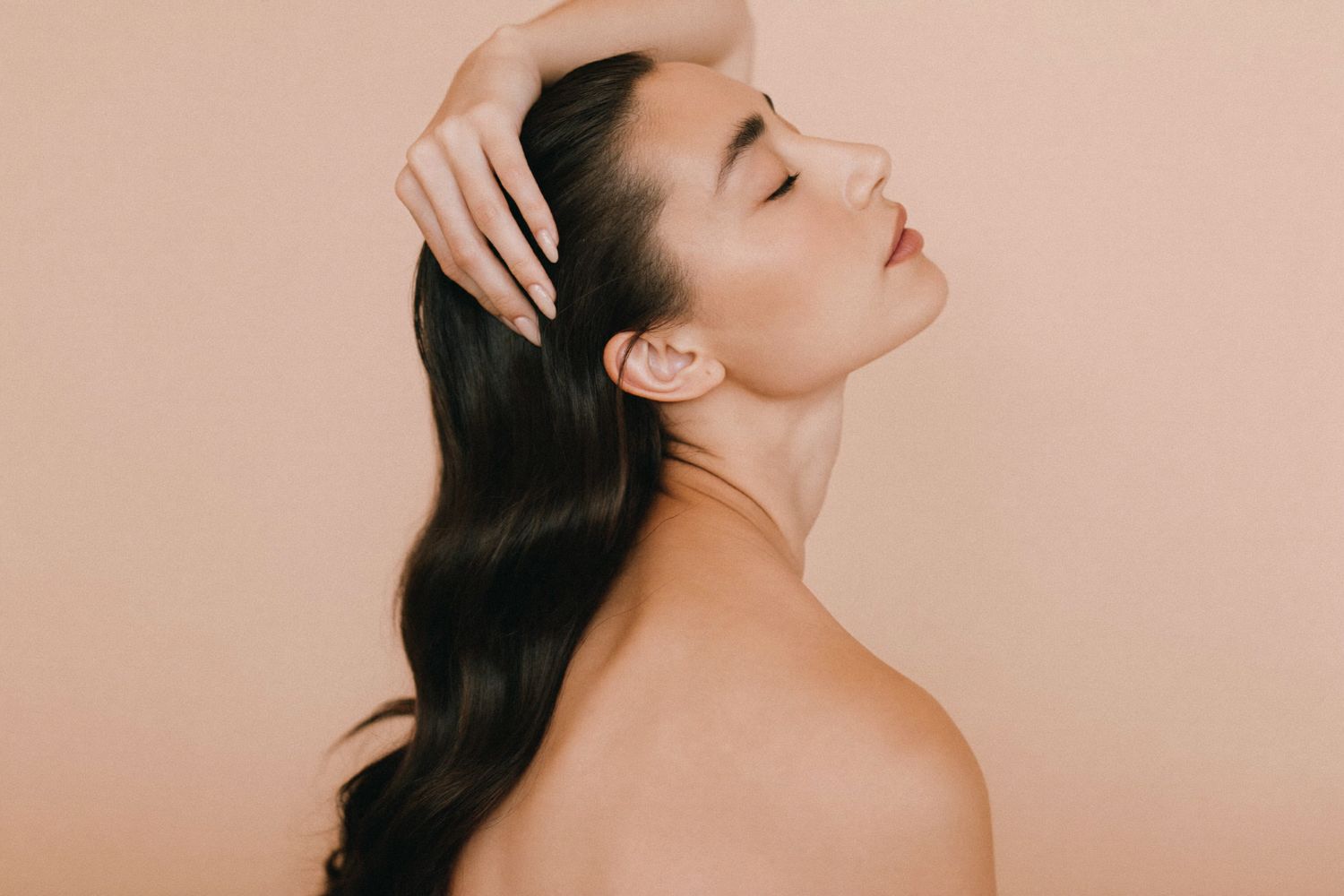
We spend a fortune on what happens to hair after it leaves the head, and almost nothing on where it is actually made. Scalp care — the “skinification” of haircare — corrects that, and it is the single most underrated upgrade you can make to how your hair looks. Your scalp is skin. It deserves a routine.
Why your scalp needs its own routine
The scalp is skin — denser in oil glands than almost anywhere on the body, threaded with blood vessels and follicles that build every strand you have. Build-up, inflammation and neglect at that level show up further down as dullness, limpness and breakage. Healthy lengths start at the root.
This is why the industry pivoted to treating scalps like faces: cleanse, exfoliate, treat, moisturise, protect. The logic transfers almost perfectly.
Identify your scalp type
Wash your hair, leave it product-free for 24 hours, then press a tissue to your roots. Oil on the tissue means an oily scalp; tightness or flakes with no oil means dry; oil at the crown with dry patches elsewhere means combination. Note that this is independent of your hair type — you can have an oily scalp and parched ends at the same time.
| Scalp type | What you notice | What it needs |
|---|---|---|
| Oily | Roots greasy within a day, flat volume | More frequent gentle cleansing, lightweight everything |
| Dry | Tightness, small dry flakes, itch | Gentle sulfate-free washing, scalp oils and hydrators |
| Combination | Oily crown, dry hairline or nape | Zone your treatment, exactly as you would on your face |
| Sensitive | Stings with new products, reddens easily | Short ingredient lists, fragrance-free, patch test |
| Flaky / dandruff-prone | Persistent white or yellow flakes | Anti-fungal actives — and a dermatologist if it persists |
The weekly scalp care routine
1. Cleanse on the right schedule
Frequency is set by your scalp, not by rules from the internet — our guide to how often to wash your hair breaks it down by type. Shampoo is for the scalp; conditioner is for the lengths. Most people do the reverse.
2. Exfoliate, but rarely
A scalp scrub or a gentle chemical exfoliant once every week or two lifts build-up from dry shampoo, styling products and dead skin. More often than that and you will irritate the barrier — the same overcorrection people make on their faces.
3. Treat while it is clean
Serums and lightweight scalp oils work best on freshly cleansed skin. Apply to the scalp itself in sections, not to the hair.
4. Protect
Your scalp burns. A parting is one of the most commonly sunburned spots on the body, and repeated burning there is genuinely bad news. A hat, or an SPF made for partings, on long days outside.
You cannot condition your way out of a neglected scalp.
Scalp massage: what it does and does not do
Five minutes of firm circular massage with your fingertips increases local blood flow, helps distribute natural oils, and is one of the more pleasant things you can do at the end of a day. Some small studies associate consistent massage with thicker strands over months.
What it will not do is regrow hair that has been lost to genetics, illness or hormonal change. Treat it as maintenance and stress relief, not treatment — and be sceptical of anything sold as a cure.
Ingredients worth knowing
Salicylic acid for build-up and flaking. Niacinamide for a stressed barrier. Zinc pyrithione or ketoconazole for genuine dandruff. Peptides and caffeine for follicle support — modest evidence, no miracles. Squalane and light plant oils for dry scalps that need comfort without heaviness.
For the clinical baseline on everyday scalp care, the American Academy of Dermatology’s scalp care guidance is the reference worth reading.
Mistakes that undo scalp care
Scratching with nails instead of massaging with pads. Piling dry shampoo on for days without washing. Scalding hot water. Conditioning the roots. Treating persistent flaking as a cosmetic problem when it is inflammatory. And chasing volume with product when the actual issue is build-up.
Frequently asked questions
How often should I exfoliate my scalp?
Once every one to two weeks for most people. Oily or product-heavy routines can stretch to weekly; sensitive or dry scalps should stay at fortnightly or less.
Does scalp care help hair grow faster?
It supports the environment hair grows in, which helps hair reach its potential and reduces breakage. It does not change your genetic growth rate. Better scalp, better conditions — not a growth accelerator.
Is a flaky scalp always dandruff?
No. Dry flaking and dandruff look similar but differ in cause: dryness produces small white flakes, while dandruff involves a yeast overgrowth and tends toward larger, oilier yellow flakes with itching. Persistent or painful flaking deserves a professional look.
KEEP READING — get your wash schedule right with how often you should wash your hair, then add hair oiling without the grease.