
Something happens to fragrance when the temperature drops. The bright citrus that felt right in July turns thin and forgettable, and suddenly you want something with weight to it — warm, edible, faintly comforting. That instinct has a name in perfumery: gourmand. And this autumn it is where nearly all the interesting movement is.
Why fragrance changes with the season
Scent travels on evaporation, and evaporation depends on heat. In summer, warm skin pushes fragrance outward fast — which is why light florals and citrus feel right and heavy scents feel suffocating. In cold air the same molecules lift slowly, so the delicate top notes barely register and the deeper base notes do the work.
That is the whole reason autumn favours vanilla, amber, woods and spice. It is not sentiment about jumpers and leaves; it is physics deciding which notes you can actually smell.
The notes defining autumn this year
| Note | What it smells like | Wear it if |
|---|---|---|
| Vanilla | Warm, soft, faintly powdery — the backbone of most gourmands | You want comfort and versatility; it flatters almost everyone |
| Cherry | Bright fruit over something darker, almond-adjacent, slightly retro | You want a gourmand with edge rather than sweetness alone |
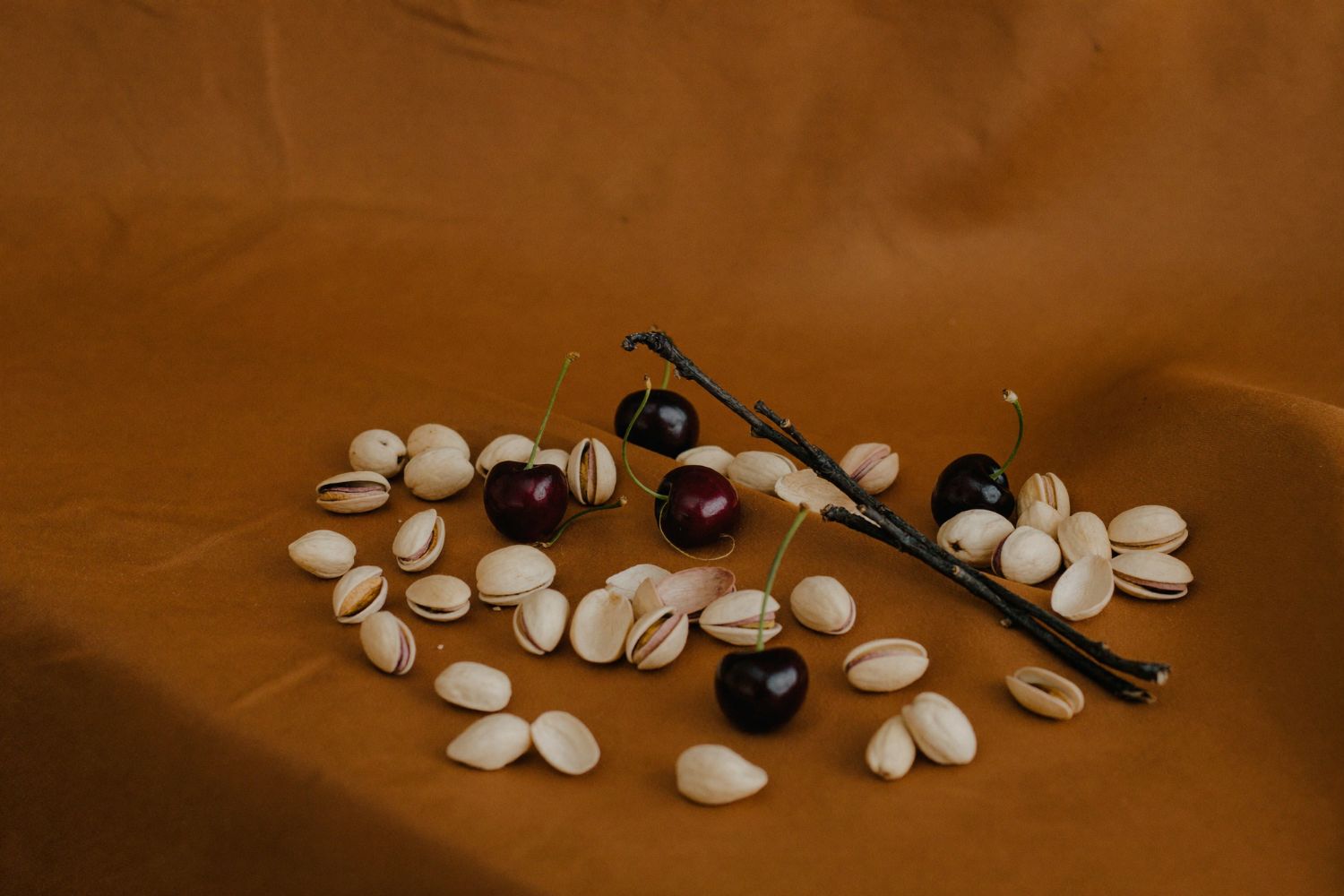
| Pistachio | Nutty, creamy, subtly green — softer than it sounds | You like gourmands but find vanilla too obvious |
| Tonka bean | Almond, hay, warm sweetness; a natural fixative | You want longevity without heaviness |
| Amber and woods | Resinous, dry, enveloping | You prefer warmth without anything edible |
Cherry and pistachio are the notable shifts — both climbing sharply this year as gourmands move away from straightforward sugar toward something more textured and grown-up.
Gourmand no longer means sweet. It means warm, and warmth has range.
How to choose yours
Test on skin, never on paper, and wait. Gourmands transform more than any other family as they warm — a scent that opens sharp and sugary at ten minutes can settle into something quiet and creamy by hour four. Buying on the opening note is how people end up with bottles they never finish.
Bear in mind that fragrance genuinely smells different on different people. Our piece on why perfume smells different on you explains what skin chemistry does to these notes — and it does most to warm, sweet ones.
Making it last longer
Apply to moisturised skin; fragrance clings to hydration and evaporates quickly from dry skin. Target pulse points at the neck and inner elbows rather than the wrists alone, and never rub, which crushes the top notes. A light mist through the ends of your hair carries scent well because hair holds fragrance longer than skin.
If a scent you love fades by lunchtime, layer a simple vanilla or musk beneath it — the technique in our guide to layering fragrance without overdoing it.
Wearing gourmands without being overpowering
Two sprays, not five. These notes have presence and they bloom as the day warms, so what feels subtle at eight in the morning can fill a lift by noon. Apply lower on the body — chest and neck rather than behind the ears — so the scent rises gently rather than announcing itself.
Consider context too: a rich vanilla amber that suits a candlelit dinner can be a lot in a warm open-plan office. Keeping something lighter for work and saving the heavier bottle for evenings is the simplest solution, and it fits the restraint of a quiet luxury approach.
Frequently asked questions
What is a gourmand fragrance?
One built around edible notes — vanilla, caramel, almond, coffee, chocolate, or in this year’s case cherry and pistachio. They are warm and comforting rather than fresh or floral, which is why they dominate autumn and winter.
How many sprays should I use?
Two to three for most gourmands, which are more concentrated than fresh scents. Start with two, wait ten minutes, and add one only if you genuinely cannot detect it — bearing in mind you stop noticing your own perfume long before others do.
Can I wear gourmand fragrance in summer?
Yes, sparingly and ideally in lighter concentrations. Heat amplifies these notes considerably, so one spray in July gives roughly what three give in November.
KEEP READING — understand how scent behaves on you in why perfume smells different on you, then build a combination with fragrance layering.