
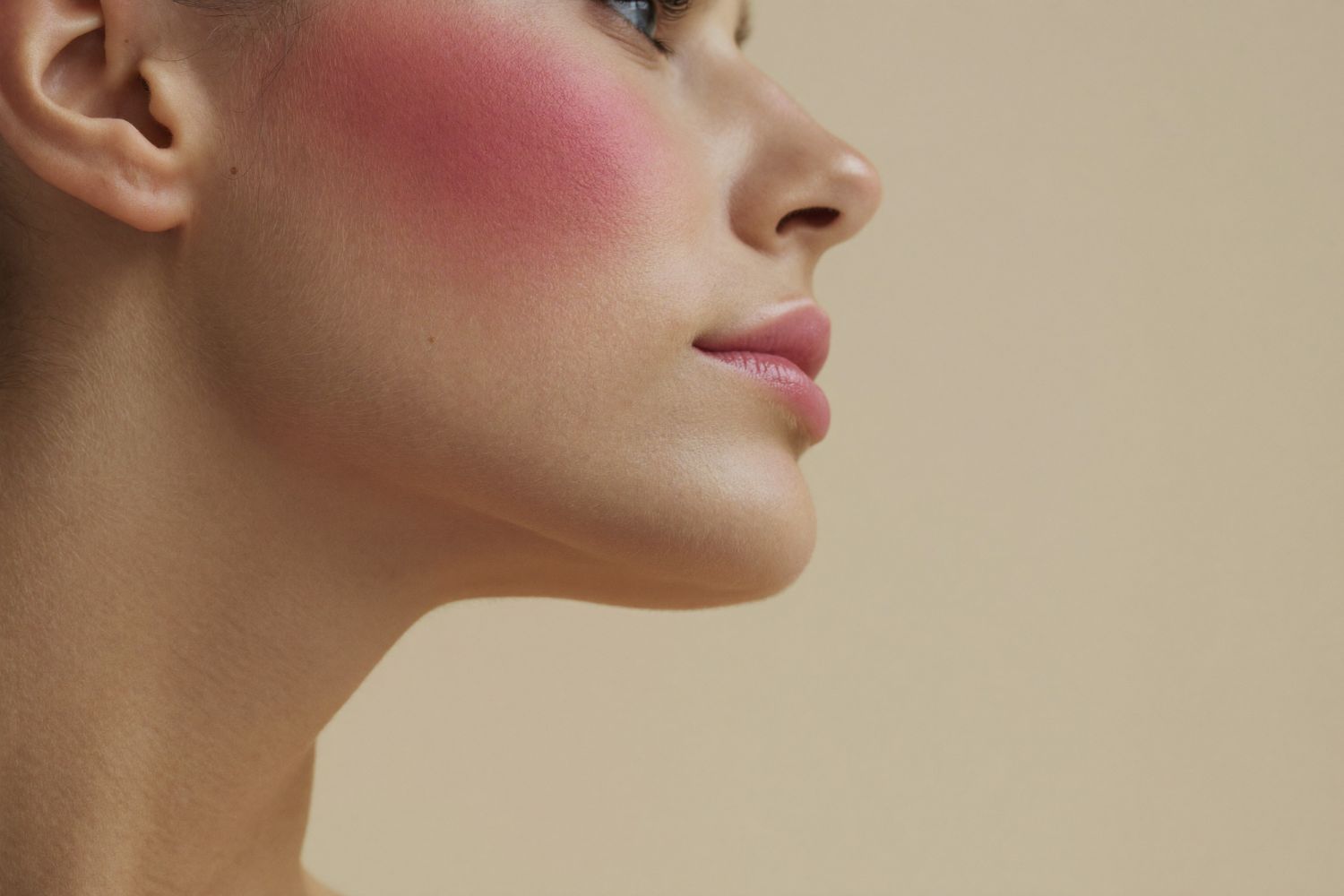
Cool-toned blush uses pink, mauve, berry or plum shades to create a soft flush. The “weathered cheeks” look is a styling idea inspired by a brisk walk: diffused colour across the cheeks, with the rest of the makeup kept simple. Here is how to choose a shade and placement that work for you, without treating a trend as a rule.
What cool-toned actually means
Warm blush leans peach, coral, apricot. Cool blush leans pink, mauve, berry, sometimes with a faint blue or purple shift. That is the entire distinction. It has nothing to do with your skin being fair or deep, which is where most people get tangled.
Neither warm nor cool blush is inherently more natural. The effect depends on the shade’s depth, your skin tone, how much you apply and the finish you prefer. A sheer cool rose can look subtle; a rich berry can make a deliberate statement.
How to style it for autumn
For an autumn palette, pair cool blush with a berry lip, brown mascara or a softly defined eye. Check the result in daylight and in the lighting where you will wear it. Warm blush can work just as well: the season does not determine which undertones you can wear.
Think of “weathered cheeks” as an inspiration for soft, blended colour, rather than a claim that everyone flushes the same way.
The best blush of the year is the one that looks like weather, not makeup.
Finding your undertone without overthinking it
Swatch a small amount on your cheek and check it in daylight. Compare two or three shades if possible, using similar coverage. You do not need to pinch or irritate your skin to choose a blush, and vein colour alone does not settle which shade you will enjoy.
| If your natural flush is | Try | Optional comparison |
|---|---|---|
| Soft pink | Cool rose, dusty pink | Peach or coral |
| Pink-red | True cool pink, raspberry | Terracotta |
| Berry or plum | Mauve, cool berry, soft plum | Peach and coral |
| Warm red | You can wear both; cool will simply look crisper | Nothing, honestly |
If you are unsure, compare a cool rose with a warmer shade before buying. On deeper skin, look for enough pigment and depth to show clearly; very pale or white-based formulas can look ashy. Undertone is a starting point, not a restriction.
Where to put it (lower than you think)
For a diffused flush, start on the apples of the cheeks and blend outward with a light hand. Keep checking your face at rest. If you prefer a lifted effect, place the colour a little higher instead; both approaches can work.
Cream formulas first, tapped in with fingers, because the warmth of your hands does half the blending. Then a translucent highlighter on the top of the cheekbone and the eyelid, which is what stops the low placement from flattening your face. Our guide to blush placement covers the older approaches if you prefer a lifted look.
Common application mistakes
Do not judge pigment strength by the pan alone. Apply a thin layer, blend, then assess before adding more. Wear time and colour changes vary by formula; cool shades do not all deepen on a fixed schedule.
A heavy layer of powder can emphasize dry patches. Use comfortable skin preparation and try a light layer of cream, liquid or finely milled powder according to your preference. If your skin feels dry, our autumn skin routine can help you simplify the base.
Keep blush and bronzer sheer and blend their edges. Application order is flexible; matching cream products with creams and powder products with powders can make blending easier.
For the practical side of wearing makeup without irritating your skin, the AAD has sensible guidance.
Frequently asked questions
Can I wear cool blush if I have warm skin?
Yes. Cool pink, mauve or berry can work on warm undertones. Choose a depth and finish you like, and match your foundation to your skin rather than changing it to suit the blush.
Cream or powder?
Either can work. Cream or liquid may give a dewy finish, while powder can be easier to build over a set base. Skin type, formula and preference matter more than a universal rule. Test a small amount and check the wear over several hours.
How do I stop blush disappearing by the afternoon?
Try thin layers and check whether your base is lifting as you blend. A small amount of matching powder blush over cream may improve wear, but results vary by product and skin type. For an event, test the combination ahead of time and bring a touch-up option.
KEEP READING — pair it with the season’s lip story in berry stains and blurred edges, or keep the whole face quick with the 5-minute face.