
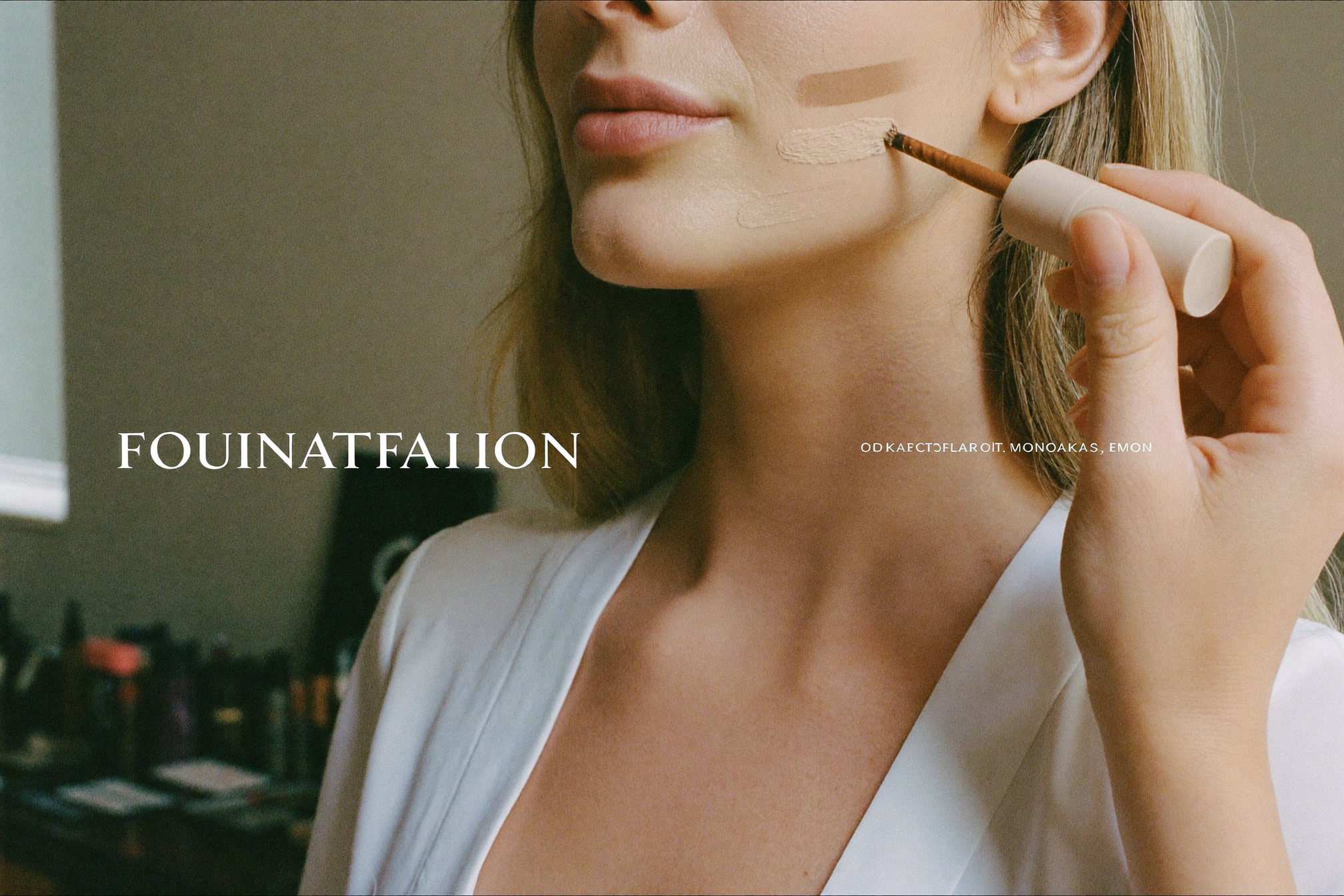
Foundation is the only product we routinely buy in the wrong colour, at full price, twice a year. The industry quietly counts on it. But matching isn’t a talent — it’s a checklist, and the whole thing runs on one unfashionable body part: your jawline.
Why the jawline, not the wrist
Your face and neck are rarely the same colour — faces get more sun and more skincare. Swatching on your hand or wrist matches you to a third region even less relevant. The jawline is the border crossing: the right shade, striped from cheek onto neck, disappears at both ends. If it vanishes on the face but sits visibly on the neck, go down a shade or warmer; a visible line at the jaw is the single most common makeup mistake in daylight.
Undertone before depth
Two shades can be equally ‘medium’ and look entirely different on skin — one too pink, one too yellow. Check your veins in daylight (greenish suggests warm, blue-purple suggests cool, honestly-can’t-tell usually means neutral) and how you tan. When stuck between two: for foundation take the warmer one; grey-leaning mistakes read as ill, golden-leaning mistakes read as holiday.
The three-stripe daylight test
Never trust the shop floor’s lighting — it’s engineered flattery. Stripe your two or three candidates along the jaw, walk to a window or step outside, wait ten minutes for the formula to oxidise (many shift darker as they set), then look. Better: wear the sample out of the shop and check at home, in your bathroom, where you’ll actually apply it every day. Any counter will make you a sample. Counters that won’t don’t deserve the sale.
You probably need two
Not a flaw — a season. Skin shifts shade between January and July, and a light and deep version of the same formula mix into every week in between. Two right shades cost less than the drawer of five wrong ones. Ask me how the drawer knows.
Matching online without a counter
Online foundation shopping fails less often with a system. Anchor to a shade you already know — most brand sites and third-party shade-matching tools cross-reference your current match to their range, and this works far better than guessing from swatch photos rendered differently on every screen. Read reviewer photos rather than brand swatches, filtering for your undertone language: golden, olive, pink, blue-red. Order two adjacent candidates when uncertain — the return postage costs less than the drawer of failures — and test properly on arrival: jawline stripe, daylight, the ten-minute oxidation wait. Keep notes in your phone with the brand, shade name and verdict, because the same undertone words mean different things across brands, and your notes become a personal translation table that improves every future purchase. Digital matching will keep improving; your jawline in daylight remains the supreme court.
Frequently asked questions
My face and neck are genuinely different colours — which do I match?
The neck, always — it borders your clothing and photographs beside your face. A face slightly warmed by sun then blends downward; a mismatched jaw line cannot be blended away.
What does oxidising actually mean?
Some foundations darken and warm as they interact with skin oils and air over minutes. It is why the perfect counter swatch turns orange by the car park — hence the ten-minute rule before judging.
How do I adjust when my shade is discontinued?
Take your notes and the old bottle to the counter equivalent in the brand’s new range, or mix: a too-light and too-deep pair in the same formula line blends into your exact shade for months of mistakes-turned-inventory.
For the clinical baseline on this, see the AAD’s guidance on wearing makeup without irritating skin.