
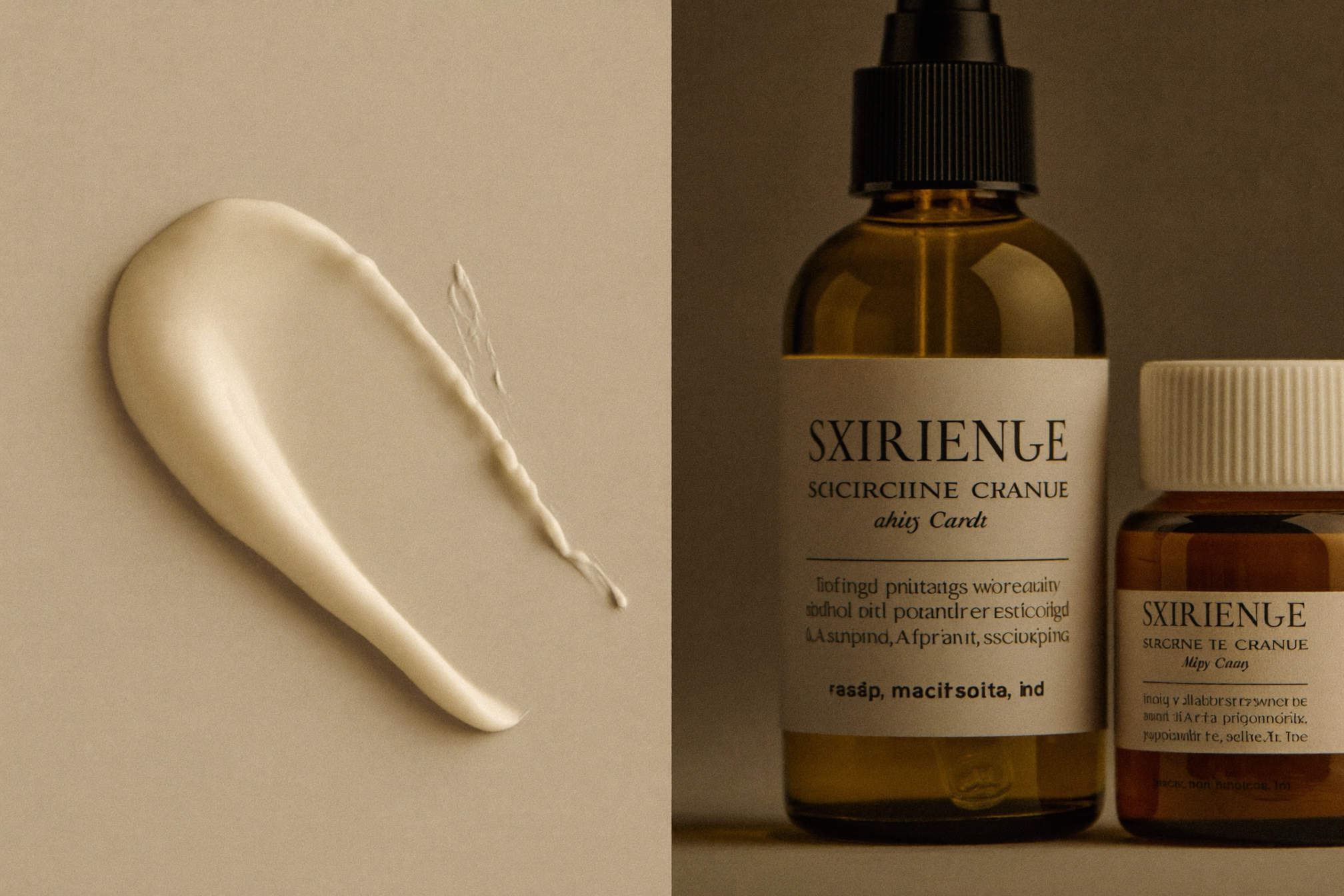
If you’ve ever wondered why your skin suddenly stings under products it used to love, meet your moisture barrier — or rather, meet it properly, because it’s been doing thankless work your whole life. Every skincare trend of the past few years eventually circles back to this one structure. Let me explain it the way I wish someone had explained it to me: like a friend, minus the diagram.
The brick wall you already own
The outermost layer of your skin is dead cells (the bricks) held together by fats — ceramides, cholesterol, fatty acids (the mortar). That wall keeps water in and irritants out. When the mortar’s intact, skin looks plump and calm. When it’s chipped — by over-exfoliating, harsh cleansers, cold wind, or sheer enthusiasm for actives — water escapes, irritants enter, and everything you apply suddenly stings.
How to know yours is struggling
The signs are consistent: tightness right after cleansing, sudden sensitivity to products you’ve used for years, a shiny-but-dehydrated look, stinging when serums touch your face. The counterintuitive one is breakouts — a leaky barrier lets bacteria in while your skin overproduces oil to compensate. Many ‘acne’ phases are actually barrier phases wearing a disguise.
The repair protocol (it’s boring, that’s the point)
Strip back to four things for two to three weeks: cream cleanser, a hydrating serum, a moisturiser rich in ceramides, SPF. No acids, no retinoids, no new anything. This is the skincare equivalent of rest days between workouts, and skipping it is why some people’s skin stays angry for months. Skin cycling exists precisely to build these rest days in before the damage happens.
Keeping it strong after
Reintroduce actives one at a time, weekly, and watch for the early tightness signal. Wash with lukewarm water — hot is the most underrated barrier vandal in the average bathroom. And know your enemy seasons: barriers chip in January wind and July air-conditioning alike. The barrier isn’t a trend that will pass. It’s the wall every other product has to get along with.
Reading ingredient lists for barrier support
Barrier-friendly shopping gets easy once you know the shortlist. Look for ceramides (often listed as ceramide NP, AP or EOP), cholesterol and fatty acids — ideally together, since the mortar is a ratio, not a single ingredient. Panthenol and glycerin are humble workhorses that appear cheap and perform expensive. Niacinamide at modest concentrations supports barrier lipid production — one of the few actives welcome during repair. On the avoid-while-healing list: denatured alcohol high on the list, fragrance if you sting easily, and every acid and retinoid until skin is calm (the reintroduction schedule is in our skin cycling guide). Price correlates weakly here — the ingredients above appear in pharmacy staples as reliably as in prestige jars, making barrier repair one of skincare’s genuinely affordable projects.
Frequently asked questions
How long does full barrier repair take?
Milder damage calms within days, but complete lipid restructuring runs two to four weeks. Skin feeling normal at day five is the trap that restarts the cycle — hold the boring routine for the full fortnight minimum.
Can I wear makeup during barrier repair?
Yes — cream, non-comedogenic formulas over your moisturiser, removed gently with the balm-first method from our cleansing guide. What matters is the removal gentleness, not the makeup itself.
Is a damaged barrier the same as sensitive skin?
Often mistaken for it. Constitutionally sensitive skin reacts lifelong; barrier-damaged skin acquired its sensitivity and loses it with repair. If sensitivity is new, suspect the barrier first.
For the clinical baseline on this, see the AAD’s advice on dry skin.