
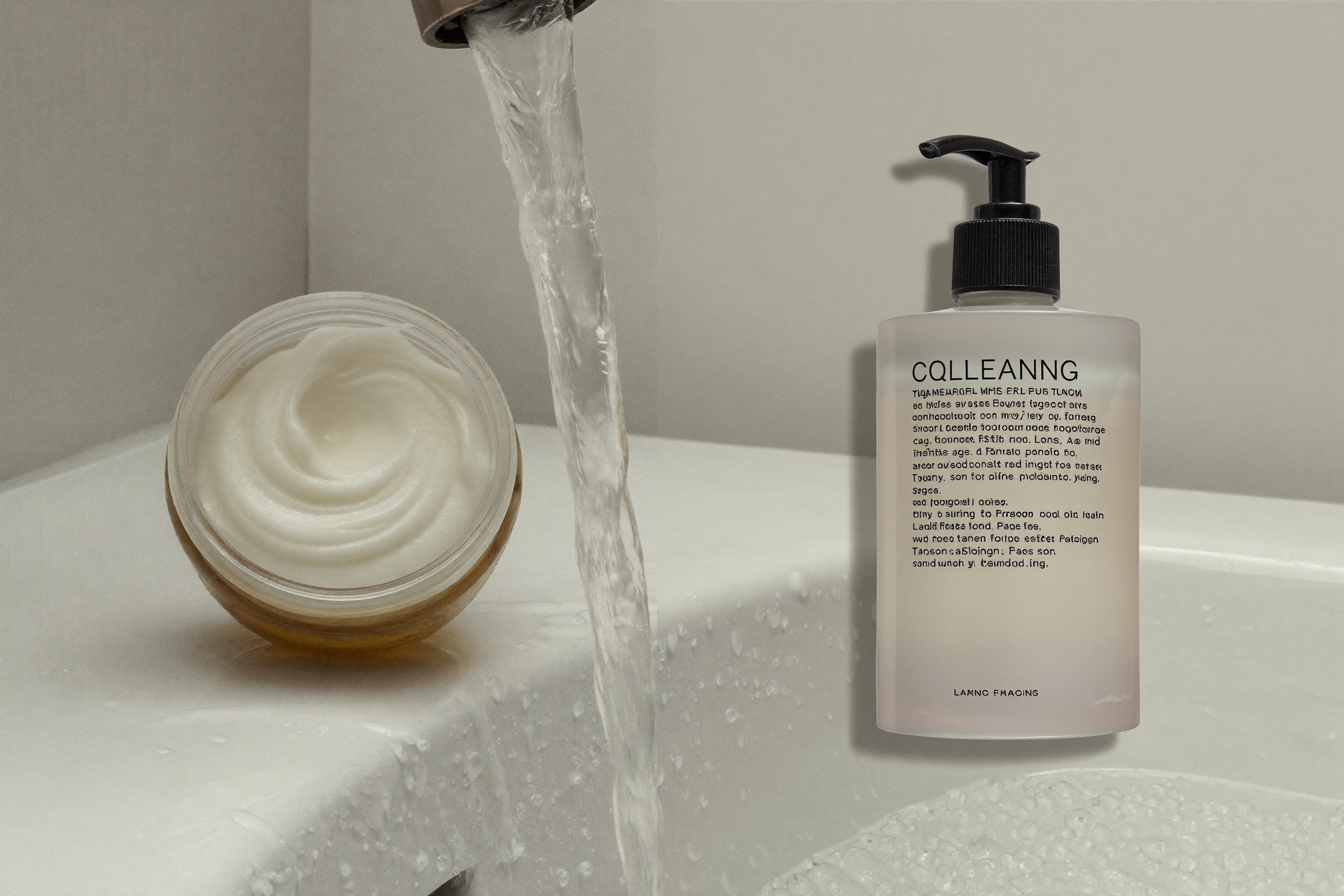
Double cleansing — an oil-based cleanse followed by a water-based one — arrived from Korean and Japanese routines a decade ago and promptly became skincare law. Like most laws written by enthusiasm, it deserves an appeal. It’s a genuinely excellent technique… for some faces, some evenings. Here’s the honest sorting.
Who needs it
If you wear sunscreen daily (you should) plus makeup, especially long-wear or waterproof formulas, double cleansing earns its two minutes. Modern SPF is engineered to cling — that’s the job — and a single gel cleanse often leaves a film you can’t see but your pores can feel. The oil phase dissolves what’s designed to resist water; the second cleanse removes the oil and the day. City commuters and oily skin types tend to notice the difference within a week.
Who really doesn’t
Bare-faced days, SPF-only mornings, dry or sensitive skin that already feels tight after one wash — doubling up here is subtraction disguised as thoroughness. Cleansing is the most over-performed step in skincare; barrier damage from enthusiasm is far more common than congestion from negligence. If your skin squeaks, you’ve gone past clean into stripped, and stripped skin ages your serums’ results faster than any missed cleanse.
Doing it properly, if you’re in
Dry hands, dry face, a proper amount of balm or oil — a full pump, not a shy dab — massaged for thirty to sixty seconds. Watching mascara dissolve is the closest skincare gets to sport. Emulsify with a splash of warm water until it turns milky, rinse, then follow with a gentle cream or gel cleanse. If your second cleanser foams like a car wash, that’s your barrier filing a complaint.
The morning question
No. Once — or just water, if your skin is dry and last night’s routine was light. Nothing accumulated on your face overnight that requires demolition. Save the ritual for evenings; save the barrier always.
Rule of thumb to keep: cleanse for what’s actually on your face, not for what a routine chart says. Skin keeps better records than influencers do.
Choosing your two products wisely
The oil phase offers three formats with different personalities. Cleansing balms are solid, travel well and suit normal-to-dry skin; cleansing oils spread fastest and massage best; micellar water is technically a light first cleanse for minimal-makeup days, though it undercleans sunscreen. Whatever the format, the emulsify step is where results happen — a splash of warm water turning the oil milky is what lets it rinse instead of residue. The second cleanser should be almost boring: low-foam gel or cream, pH-respectful, fragrance-light. A common and expensive mistake is pairing a luxurious balm with a harsh foaming second step that undoes the gentleness — the two products are a team with one shared goal, clean-but-comfortable, and the barrier referees every evening. If skin feels tight before you have even applied toner, the team needs a transfer.
Frequently asked questions
Can I double cleanse with just my gel cleanser twice?
It removes more grime than one pass but misses the point — water-based formulas struggle with the oil-soluble films of SPF and long-wear makeup. The oil phase is the mechanism, not a repetition.
Do cleansing wipes count as a first cleanse?
As an occasional travel compromise, barely. As a nightly method, they redistribute more than they remove and the rubbing costs more than the convenience pays.
Should I double cleanse after workouts?
Sweat is water-soluble — one gentle cleanse handles the gym. The exception is workouts wearing makeup and SPF, which is exactly the double-cleanse scenario, or the mid-day hypochlorous spray when no sink is near.
For the clinical baseline on this, see the AAD on the order to apply skin care.